
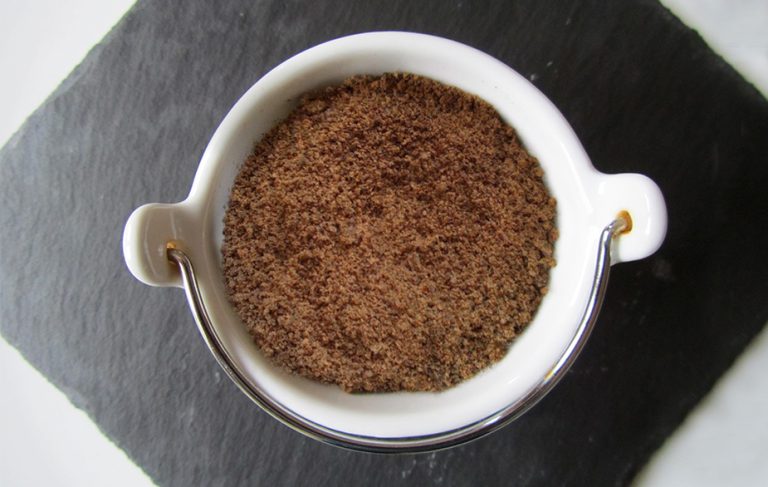
Acorn flour is one of those wild ingredients that sounds more complicated than it really is. You just need to take a bit of time and patience.
Once your acorns have been properly prepared and leached, turning them into flour is mostly a matter of drying, grinding and storing them well.
The result is a naturally gluten-free flour with a distinctive nutty flavour that can be used in breads, cakes, biscuits, pancakes and other baking.
Leach Acorns First
Before acorns can be transformed into the flour we’ll bake with, they need to undergo a bit of a transformation themselves. The tannins they contain make them bitter, so we must remove them before using them.
I’ve covered the process separately in my guide to leaching acorns, including why tannins matter and how to tell when your acorns are ready.
This article picks up after leaching.
At this stage, the acorn pieces are edible but still contain a lot of water. Before they can become a useful flour, that moisture needs to be removed thoroughly. Then comes the satisfying bit: grinding them down into flour.
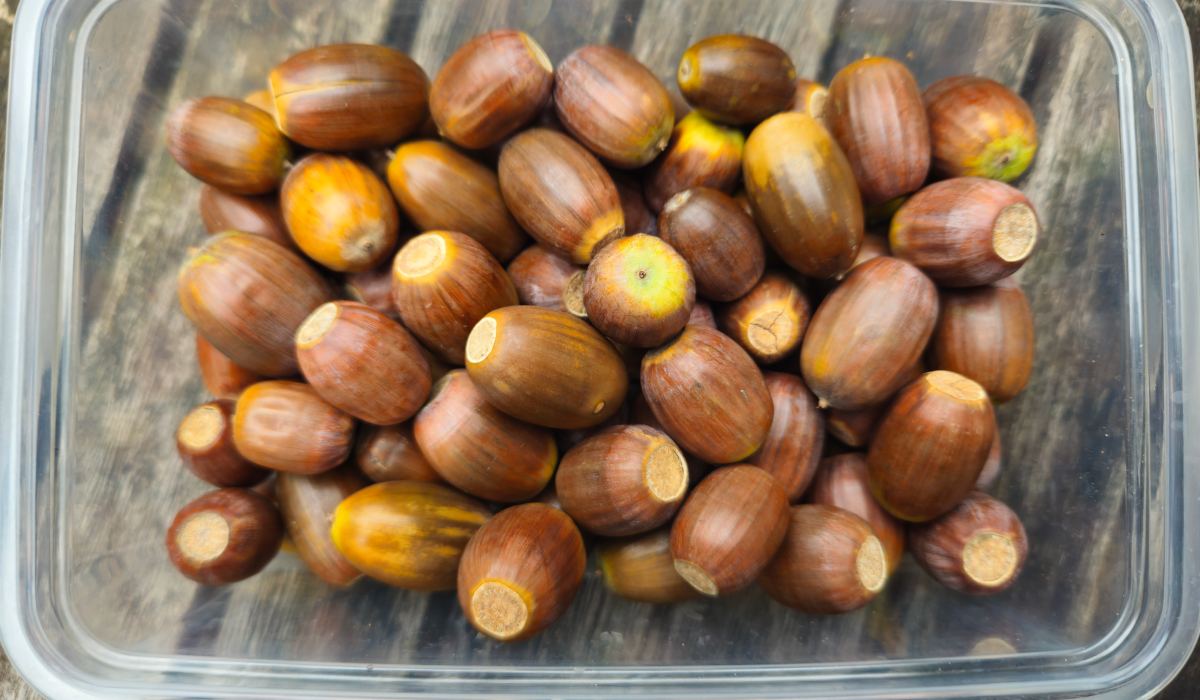
Step 1: Drain the Acorn Meal
Once you’ve finished leaching, drain the acorn meal thoroughly. A fine sieve works well, but you can also tip the meal into a clean cloth and squeeze out as much water as you reasonably can.
Don’t worry about getting every last drop at this stage. The next step is where most of the moisture will disappear.
The important thing is not to leave the wet meal sitting around for longer than necessary. Treat it as a fresh food and move on to drying it.
Step 2: Dry the Acorn Meal
Spread the drained acorn meal in a thin, even layer on a baking tray or dehydrator tray. The aim is simple: get it properly dry without accidentally cooking it.
You have several options:
Oven
Use a low oven, ideally around 50°C or below, and spread the meal thinly so moisture can escape. Stirring or turning the meal occasionally can help it dry evenly.
Dehydrator
A food dehydrator works particularly well because it gives you controlled, gentle heat and good airflow. Set it to around 50°C or below and dry the meal until it is completely dry throughout.
Air Drying
If the weather is warm and dry, you can also air-dry the meal somewhere clean, dry and well ventilated. This takes longer and needs more attention to prevent the meal from picking up moisture again.
The exact drying time will depend on how wet the meal is, how finely it was chopped and which drying method you’re using. Don’t rely on a particular number of hours. Rely on the result. The meal should be genuinely dry rather than merely dry on the surface.
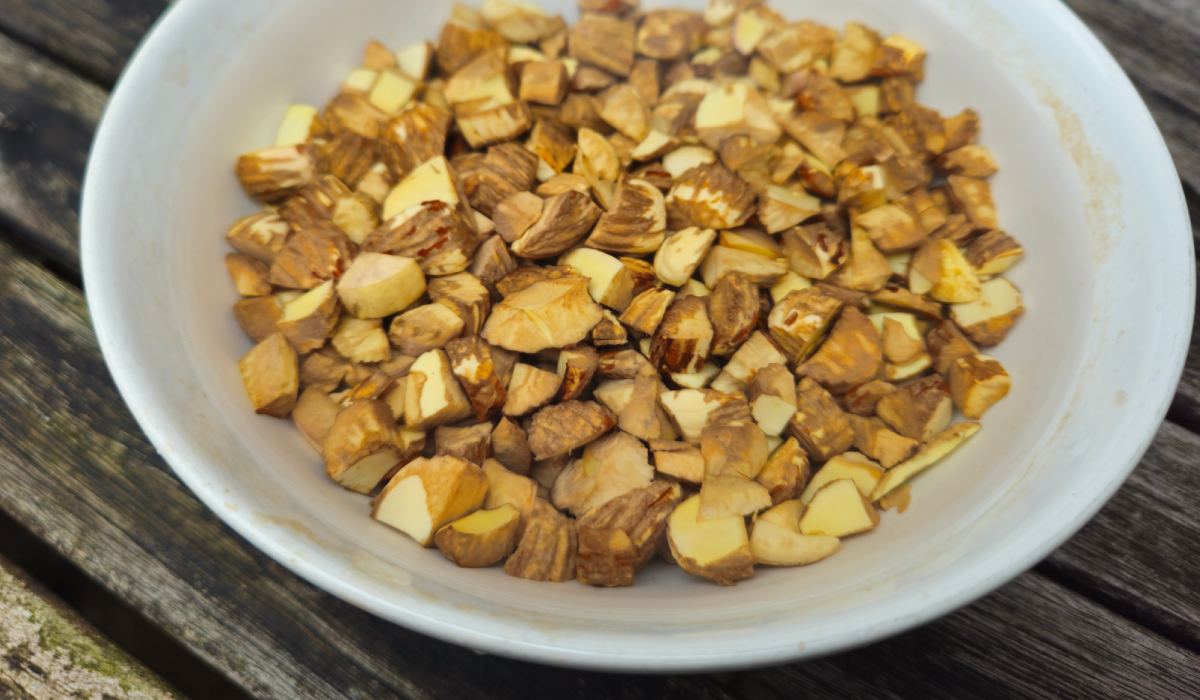
Step 3: Grind Into Flour
Once the acorn meal is completely dry, it’s ready for grinding.
A strong blender, food processor, grain mill or coffee grinder can all work, depending on the quantity and the equipment you have. Work in small batches if necessary.
Grind the dried meal until you reach the texture you want. For most baking, a reasonably fine flour is preferable, although a slightly coarser meal can be useful in some recipes.
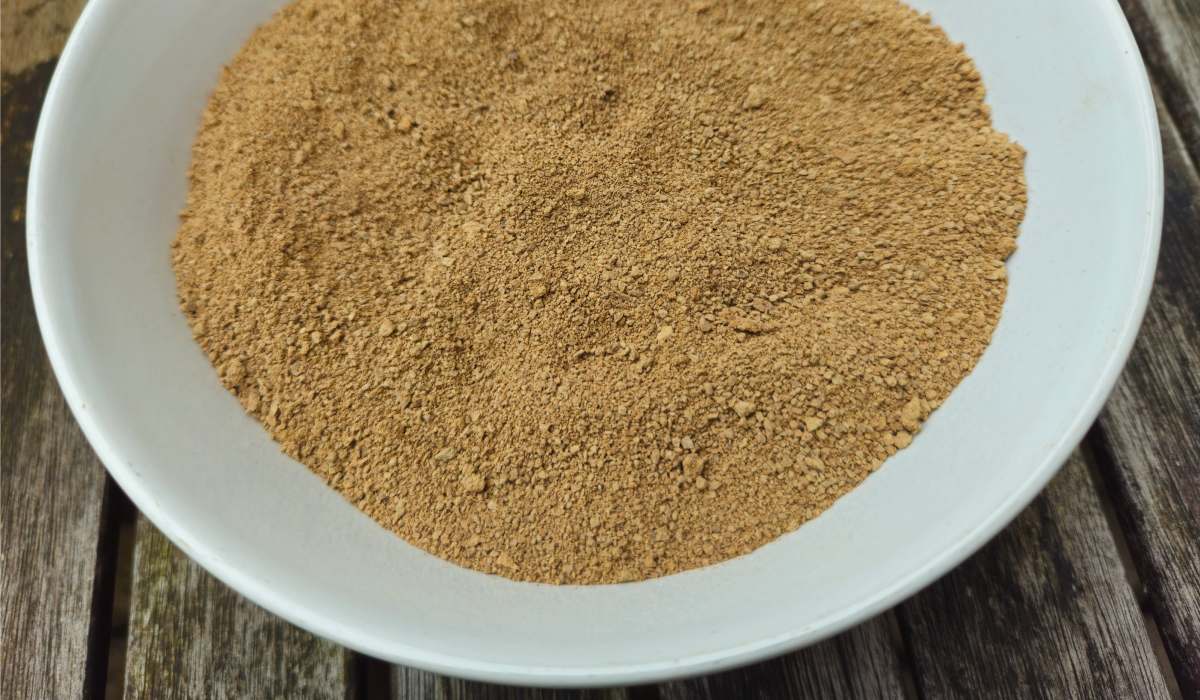
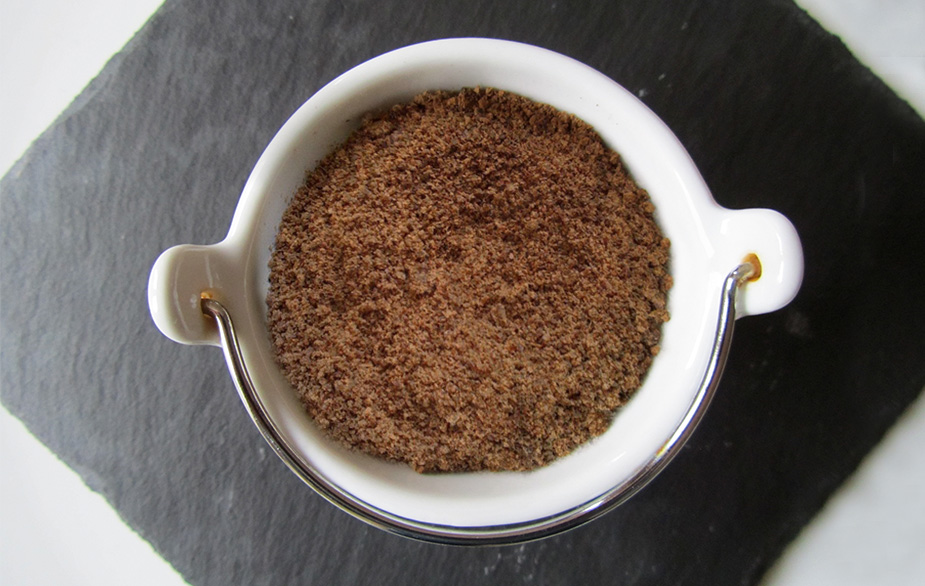
If your first batch looks a little rustic like mine in the picture, don’t worry. Acorn flour doesn’t have to look like supermarket wheat flour to be useful. In fact, a little texture can be quite pleasant in biscuits, pancakes and some breads.
If you want a finer flour, simply sieve it and return the larger particles to the grinder.
Step 4: Store Your Acorn Flour
Acorns contain a significant amount of oil, including unsaturated fats. That is part of what gives acorn flour its rich flavour, but it also means the flour is more prone to going rancid than a very low-fat flour.
For that reason, storage matters.
Once the flour has cooled completely, put it into a clean, airtight container.
For short-term use, keep it somewhere cool, dark and dry.
For longer storage, the fridge or freezer is a better choice. This slows the deterioration of the oils and helps preserve the flavour.
If you have made a large batch, there is little advantage in keeping all of it at room temperature. You could also divide it into smaller portions before freezing, so you can take out only what I need.
How to Use Acorn Flour
Acorn flour has a flavour of its own. Depending on the oak and how the acorns have been processed, it can be nutty, earthy, slightly sweet and pleasantly rich.
It also behaves differently from wheat flour. Acorn flour contains no gluten, so it cannot provide the stretchy gluten network responsible for the structure of ordinary wheat bread. That is why it is often most useful as part of a flour blend rather than as a complete one-for-one replacement.
This isn’t a disadvantage. It’s simply something to understand before you start baking. A little acorn flour can bring a surprising amount of character to an otherwise familiar recipe.
How Much Acorn Flour Should You Use?
There isn’t one magic percentage that works for everything. For a conventional wheat loaf, starting with around 10–15% acorn flour is a sensible place to experiment.
For example, if your recipe uses 500 g of flour, you could replace 50–75 g with acorn flour. You can increase the proportion from there and see what you prefer.
Research into acorn flour in breadmaking has found that larger amounts can change dough behaviour and produce denser loaves, while more moderate additions can give good results. The ideal amount therefore depends on the recipe and the result you’re after.
For cakes, biscuits and other less gluten-dependent baking, you have more freedom to experiment.
And if you’re deliberately making a gluten-free recipe, acorn flour can be combined with other gluten-free flours and starches to build the structure that acorn flour cannot provide on its own.
What Can You Bake With Acorn Flour?
This is where things get interesting. Acorn flour works particularly well in foods where its rich flavour has somewhere to shine.
Bread
Acorn bread has a wonderfully dense texture and a rich, nutty flavour that’s reminiscent of rye bread, making it the perfect base for both savoury and sweet toppings. One standout example is the Portuguese pão de bolota. I’ve got a separate recipe for acorn bread if you want to start there.
Pancakes
Pancakes are an easy way to experiment because you don’t need to build the same structure as you would with a tall, airy loaf. Try replacing part of the flour with acorn flour for a richer, more earthy pancake. You can find my acorn pancake recipe here.
Cakes and Biscuits
For those with a sweet tooth, it can be used to bake delicious cakes, muffins, and even a unique twist on the Italian castagnaccio—which I like to call ghiandaccio.
Its nutty flavour works particularly well with warming spices, chocolate, dried fruit and autumnal flavours. Acorn flour can also give biscuits a pleasantly dense, crumbly texture.
Pasta and Dumplings
Acorn flour can be incorporated into pasta dough, gnocchi and other flour-based dishes. Because it has no gluten, however, it won’t behave like ordinary wheat pasta flour. Blending it with another flour is usually the more straightforward approach.
The result pairs beautifully with wild mushrooms, venison, or rich, rustic sauces. It works especially well in dishes like tagliatelle, gnocchi, and German spaetzle.
Acorn Noodles
Acorn flour has been used in different food traditions, and acorn-based noodles or Dotoriguksu (도토리국수) remain part of traditional Korean cuisine. The dough is often mixed with other flours like buckwheat or wheat. These noodles resemble soba noodles.
Is Acorn Flour Worth the Effort?
That’s probably the better question. Making acorn flour isn’t difficult, but it isn’t instant either. There is the gathering. The sorting. The shelling. The leaching. Then the drying and grinding.
You can buy a bag of wheat flour and be baking within minutes, but that’s also rather missing the point.
Acorn flour gives you something that ordinary flour doesn’t: a direct connection between the landscape and the food on your plate. You start with something lying beneath an oak tree and finish with an ingredient you can actually cook with.
And the flavour is worth paying attention to. Acorn flour isn’t simply a novelty substitute for wheat. It has its own character, and the more you use it, the better you begin to understand where that character works.
Start small. Replace a little of the flour in something you already know how to make. Taste the result. Adjust the proportion next time.
That’s often the most enjoyable way to learn what an ingredient can do. If you’ve already gone to the trouble of leaching your acorns, don’t stop there. Dry them. Grind them. Bake something.

6 thoughts on “How to Make Acorn Flour for Baking”
Many thanks to you for the knowledge about Acorns. Cannot remember if you talked about this, can Conkers be made edible?
Hi Anura, thanks for your message! Conkers aren’t edible, though some people do use them to make soap. You’ve just given me a great idea for the next newsletter, so thank you! 🙂
Hi, thank you for this amazing resource. I am currently researching foraging in Britain, so this is most welcome.
Thank you Allison! I’m glad you found it helpful. Wishing you all the best with your research.
Are the acorns any nutrients?
Hello Elda, acorns boast high levels of carbohydrates, protein, and dietary fat, primarily composed of healthy monounsaturated fatty acids like oleic acid. Moreover, they provide essential minerals like magnesium and potassium, along with polyphenols.