
Garlic Mustard: Plant profile
Common names
Garlic Mustard, Hedge Garlic, Jack by the Hedge, Jack in the Bush, Poor Man’s Mustard, Sauce Alone, Penny Hedge, Garlic Wort, Bóchoinneal (IE), Knoblauchsrauke (DE), Look-zonder-look (NL), Alliaire officinale (FR), Czosnaczek pospolity (PL)
Botanical name
Alliaria petiolata
Plant Family
Brassicaceae (Cabbage)
Distribution
Native throughout Europe, North Africa, western and central Asia. Introduced in North America, where it’s considered invasive. Very common throughout England, Wales, south Scotland and east Ireland.
Where to find Garlic Mustard
Shady hedgerows, woodland hedges and disturbed areas.
When to find Garlic Mustard
Leaves early to mid-spring. Seeds early to late summer.
How to identify Garlic Mustard
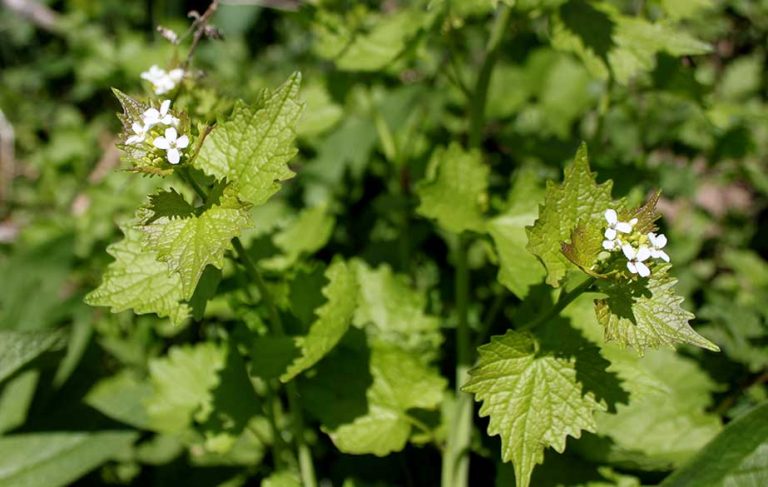
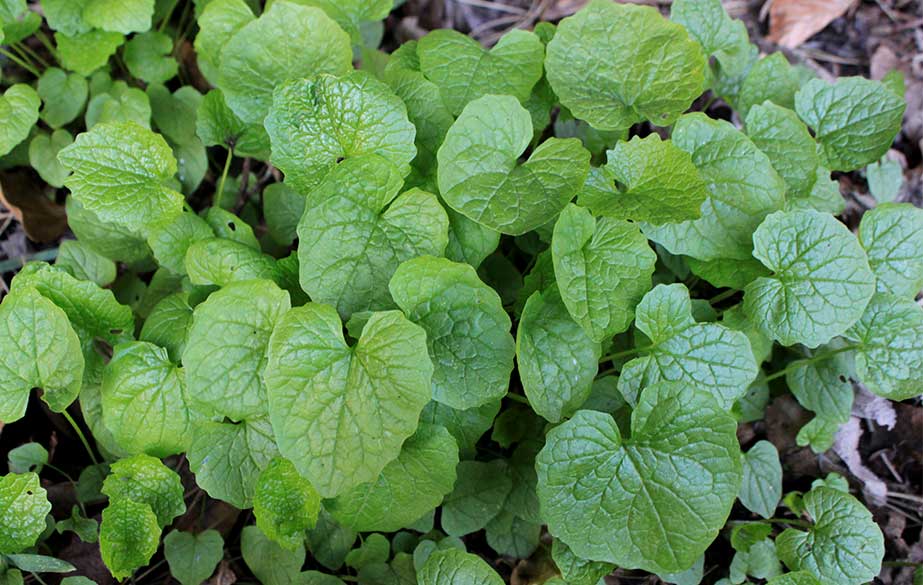
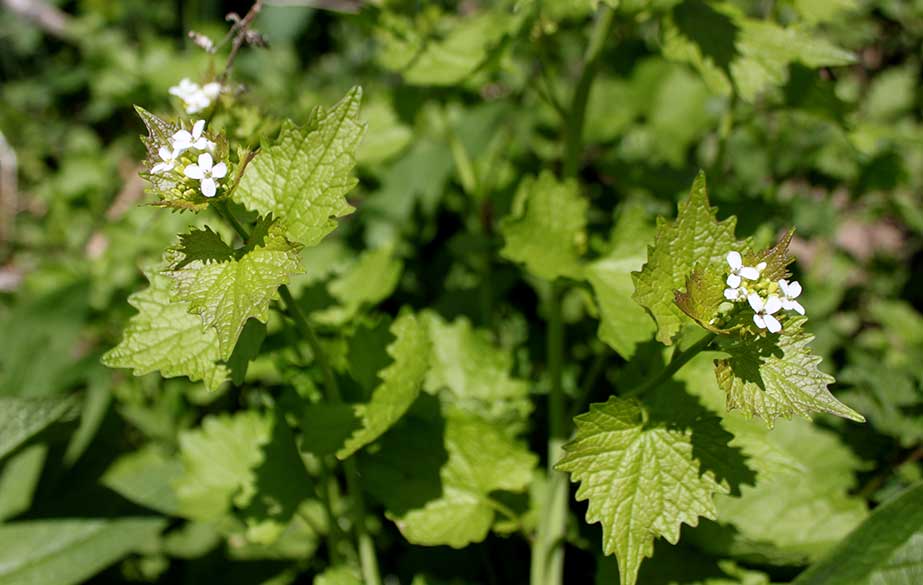
Hedge garlic is an herbaceous biennial plant, meaning it has a two-year life cycle. In the first year, it forms a compact basal rosette of heart-shaped leaves with rough teeth. During year two, Garlic Mustard develops a flower stalk and reaches up to 120cm tall. The seed pods are green and thin.
Garlic Mustard lookalikes
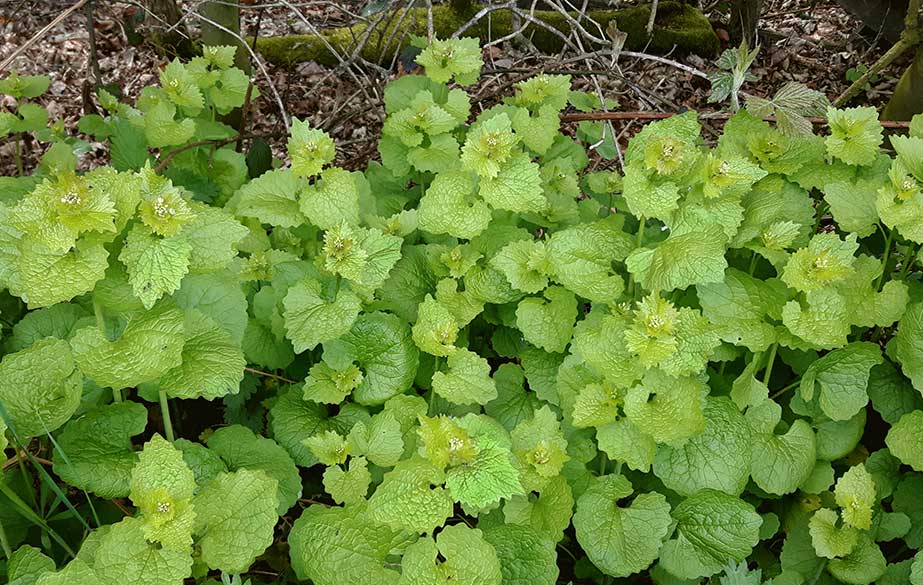
It could be confused with Honesty (Lunaria annua) by the leaves, but it has purple flowers. Garlic Mustard also resembles Yellow Archangel (Lamium galeobdolon), however flowers are yellow and leaves are often variegated. None of those two smell of garlic, like it does Hedge Garlic.
All about Garlic Mustard
This biennial herb, member of the cabbage family, does exactly what it says on the tin. The flavour is a pleasant mixture of mild garlic and a hint of mustard, though it becomes bitter after flowering.
You’ll find it growing abundantly in the shade of hedgerows and woodland edges, along footpaths and disturbed areas all year long, though it’s best picked early to mid-spring.
How to identify Garlic Mustard
Garlic Mustard has been little used in herbal medicine. The leaves are effective in relieving the itching caused by bites and stings and have been used to treat asthma, bronchitis and eczema.
Culinary uses and recipes with Garlic Mustard
Every part of the plant is edible. The flowers make a pretty garnish for salads and the dried seeds work as a poor man’s mustard. The long thin taproot has a mild horseradish flavour too.
The leaves are best finely chopped and added sparingly to salads or eaten in cheese sandwiches. A “pesto” sauce seems to be a forager’s favourite, but it also pairs very well with lamb. Add to soups and stews at the very end of cooking, otherwise they’ll make the meal taste bitter.
Safe foraging of Garlic Mustard
Garlic mustard can release small amounts of cyanide when ingested, like many other common plants. However used as an herb, levels are typically not high enough to cause any harm. In Europe, garlic mustard has been used as a culinary herb for centuries with no adverse effects.
Ecological importance of Garlic Mustard
Garlic Mustard is a source of food for the caterpillars of the orange-tip butterfly

12 thoughts on “Garlic mustard”
Do you have a reference for the second year foliage having lower concentrations of cyanide? The chemistry of this plant is fascinating. I can only find papers about young plants in the first year.
Hi Pat, here’s the paper where I got that information from: https://pubmed.ncbi.nlm.nih.gov/17146719/
I have read that paper very carefully and the oldest plant they tested was 10 weeks from seed. None of the plants tested were in their second year.
The full paper can be found here: https://waingerlab.cbl.umces.edu/FreeMindMaps/FreeMind_Papers/Forbs/Cipollini_&_Gruner_2007.pdf
I see what you mean, it looks like there’s no report on the second year on that study. One might assume so, as the cyanide concentration on the leaf generally declined with leaf age, though it’s not actually tested, so it’s not definitely proved. I’ll amend the article to reflect this, thank you!
Leaf age in that case being up to 4 weeks, as young seedlings. Sorry for the bad news, I am always like Gandalf Stormcrow. I bet it would be cheap to get an analysis for hydrogen cyanide from an analytical company, compared to a full nutritional profile. Perhaps I will have a job again soon and might consider it then.
If you ever try, do let me know your results! 🙂
Hi
I have the PictureThis App on my iPhone and it tells me that it is slightly toxic in humans as it contains “precursors to hydrogen cyanide”
Is this your understanding?
Hi Tim. Yes, garlic mustard can release small amounts of cyanide when ingested, like many other common plants. However used as an herb, levels are typically not high enough to cause any harm. Cyanide levels also decrease in the second year of growth, when they are best harvested. In Europe, garlic mustard has been used as a culinary herb for centuries.
How do you know they decrease in the second year of growth if the cited study only goes to ten weeks?
I’ve just amended my original text, as I can’t find the original source where I got it from, thank you for bringing it to my attention!
Me pareció interesante. Gracias.