
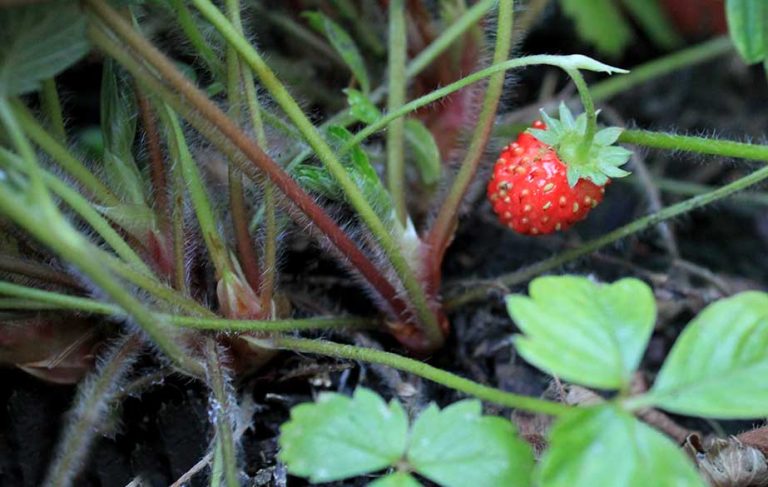
Wild strawberry: Plant profile
Common names
Wild Strawberry, Alpine Strawberry, Woodland Strawberry, Sú Talún Fiáin (IE), Fraise des Bois (FR), Smultron (SWE)
Botanical name
Fragaria vesca
Plant family
Rosaceae (Rose)
Where to find Wild Strawberries
Wild strawberries thrive in woodland clearings, grassy places, hedge banks, hillsides, and scrubland.
When to find Wild Strawberries
Harvest the leaves during early to mid-spring and gather the fruit from late spring to early summer.
How to identify Wild Strawberry
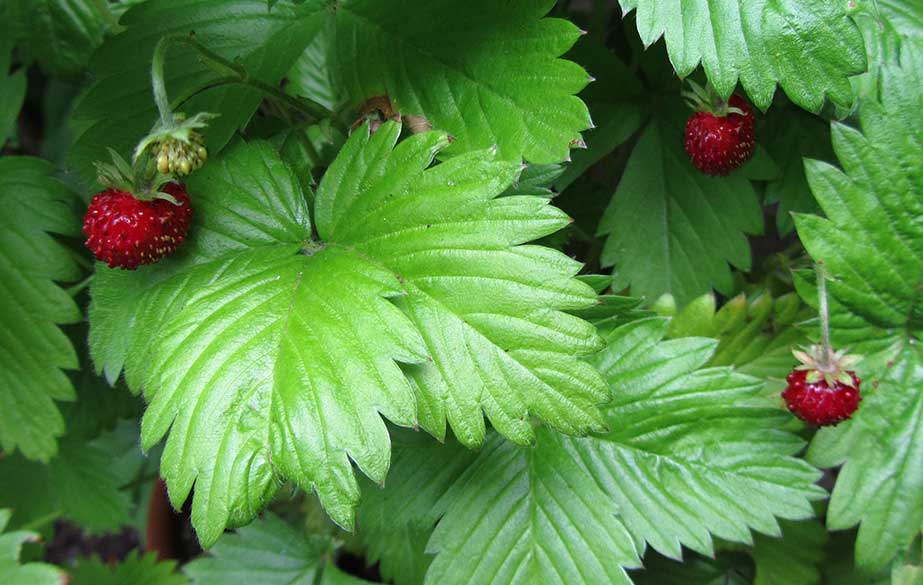
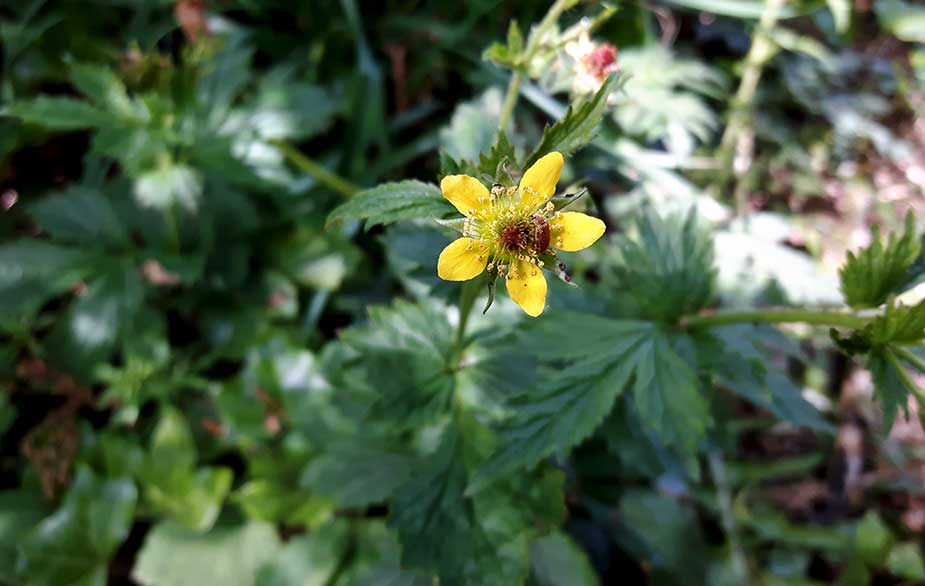
Wild Strawberry, a low herbaceous perennial with a hairy green to red flower stem. Its leaves consist of three leaflets with serrated edges and pale undersides.
The flowers exhibit five white petals with a golden centre. The small, heart-shaped fruits are red in colour and are adorned with tiny seeds on the outside.
Wild Strawberry lookalikes
People may mistake wild strawberry for Barren Strawberry (Potentilla sterilis), but the latter does not produce visible fruit. On rare occasions, you may come across the Mock Strawberry or Indian Strawberry (Potentilla indica) planted in gardens.
However, it is worth noting that while the Mock Strawberry is edible, it lacks any significant flavour.
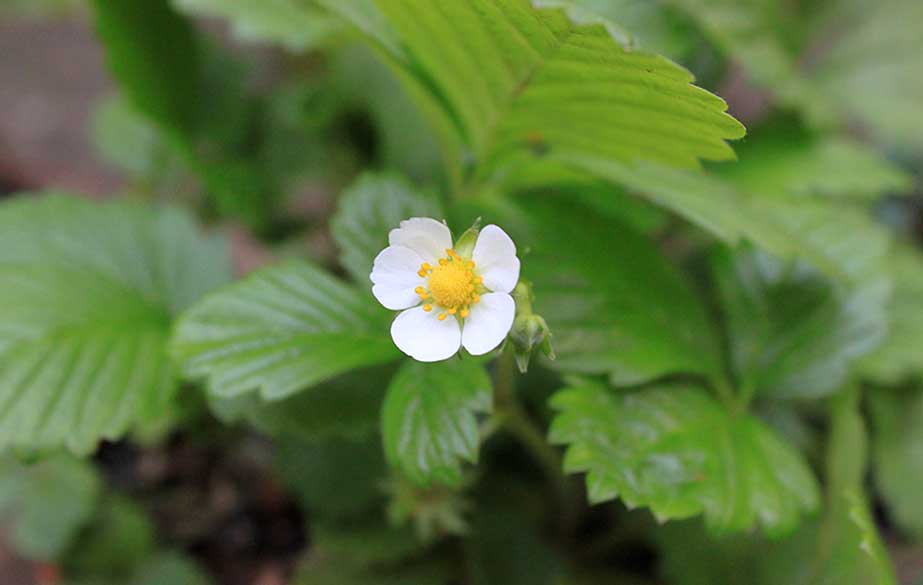
All about Wild Strawberry
The Wild Strawberry plants found in woodlands are not escapees; they are native plants that differ completely from the domestic varieties we cultivate in our gardens.
Unwary foragers often overlook the opportunity to gather these exquisite little gems, as they are skilfully camouflaged under the foliage.
It’s worth noting that their diminutive size might deceive one into underestimating the delightful taste of wild strawberries, which is notably sweeter than their larger counterparts.
Culinary uses and recipes with Wild Strawberries
It’s truly remarkable how these tiny berries manage to encapsulate such a burst of flavour, compensating for what they lack in size. Unfortunately, collecting a substantial amount of wild strawberries indeed requires dedicated picking.
Wild strawberries have an incredibly sweet taste with a hint of vanilla. The fruit is best eaten fresh, either on its own or accompanied by Greek yoghurt, cream, or ice cream.
Additionally, they can be preserved into delectable jams, jellies, and syrups, or incorporated into muesli and granola mixes for added delight.
Medicinal properties of Wild Strawberries
Wild strawberries are not only a delectable treat but also a source of valuable nutrients. The fruit is abundant in natural sugars as well as essential vitamins B, C, and E.
Furthermore, the young leaves possess mild astringent properties, making them beneficial as a diuretic, laxative, and tonic. These leaves can be utilised in herbal teas to alleviate symptoms of diarrhoea, digestive upsets, and urinary complaints.
Safe foraging of Wild Strawberry
No hazards known.
Ecological importance of Wild Strawberry
Insect larvae and small mammals find the fruits of wild strawberries a delectable food source.
Sustainable Wild Strawberry foraging
Adhere to standard foraging practices by ensuring that you leave an ample number of berries behind for animals to nourish themselves.
Given that wild strawberries are not particularly abundant, it is advisable to pick from larger colonies rather than depleting smaller patches. This approach promotes sustainability and allows the wild strawberries to thrive.

8 thoughts on “Wild strawberry”
I heard that wild strawberries originally came to the UK with the Roman soldiers.
Nice to eat ‘on the hoof’ and for topping porridge, yoghurt etc., but when I harvested a whole load to make some jam, I found it to be very bitter (and if I’d used more sugar, it probably would have been more sugar than strawberry!), so maybe best used in combo with another fruit if making jam/a sauce/compote.
I just filmed the picking of these delicacies for my next Video Diary from the French Gaume! Thanks for your story…
I have a whole colony of them in the gravel driveway, growing amongst the heal all and wild violets! As most people who visit here have never heard of them, it’s a delight to let them taste them! There rarely eaten by the many birds that visit my property and have managed to grow right up the 30 foot driveway. I use both the leaves and berries daily in cereal and in tea infusions they never fail to delight me.
I have these in my garden and they are valuable groundcover. However, I find that the fruits generally only ripen on one side, so we get to eat very very few.
I have wild strawberries in my garden and the berries never reach the kitchen – very much my favourite fruit!
Mash them into creme fraiche with a bit of sugar and lemon juice for an instant delicious desert. We have hundreds of plants in our garden and its always a race to beat the blackbirds to them – worth it when you manage it though!
Do you have any fresh wild strawberry for sale or what is the time to buy them please ?
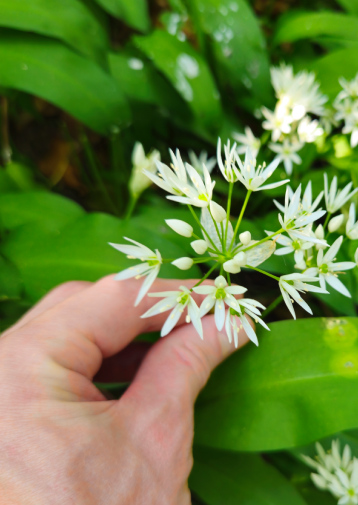
Do you have any fresh,wild garlic aswell
Hi Elisabeta,
I do not sell any ingredients.
Wild garlic is not in season right now, you’ll have to wait till next year’s early Spring.