Responsible foraging is one of those phrases that gets used a lot and explained very little. It often appears alongside rules, warnings, or well-meaning lists, yet rarely gets unpacked in a way that feels grounded in real practice.
For most people, the question behind it is simple: how do I forage without harming myself, the land, or anyone else? That is where responsible foraging begins. Not with abundance or excitement, but with care.
This page sets out what responsible foraging actually means in practical terms, with safety as its foundation and respect as its direction of travel.
What Responsible Foraging Really Means
Responsible foraging is not a fixed standard you reach and then move on from. It is a way of paying attention that adapts to place, season, and circumstance. The same action can be harmless in one location and damaging in another, depending on pressure, habitat, and what else is happening around it.
This is why responsibility cannot be reduced to a simple checklist. Context matters. A plant that is common in one area may be scarce a mile away. A patch that copes well with light harvesting may decline quickly if visited repeatedly. Responsible foraging asks you to notice these differences rather than assume uniformity.
At its heart, it is about restraint informed by understanding. Knowing when something is technically possible is very different from knowing when it is appropriate.
Safe Foraging Comes First
Before ethics, sustainability, or tradition, there is safe foraging. Without safety, nothing else holds.
Responsible foraging means never harvesting a wild plant unless you can identify it accurately and confidently. That includes understanding its toxic lookalikes, knowing which parts are edible, and recognising how preparation affects safety. Guesswork has no place here. Neither does optimism.
Safe foraging also means paying attention to where plants grow. Roadside verges, industrial land, sprayed fields, and contaminated watercourses all present risks that cannot be seen by eye alone. A plant may be edible in principle and still unsafe in practice because of its environment.
Choosing not to forage is often the most responsible decision available. Caution is not a barrier to learning; it is the ground learning stands on.
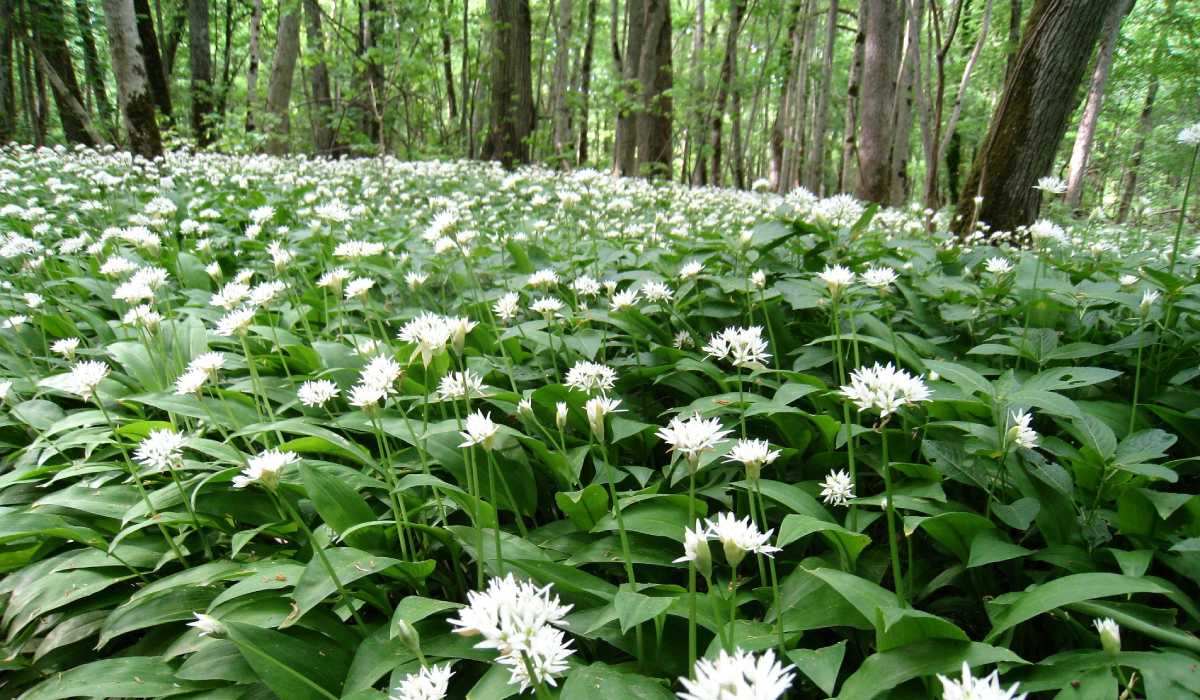
Foraging With the Land in Mind
Responsible foraging does not stop at personal safety. It extends outward to the land itself and the systems that support it.
Plants are not isolated resources. They exist within networks of soil, insects, fungi, animals, and seasonal cycles. Removing too much, too often, or at the wrong time can disrupt these systems in ways that are not immediately obvious but accumulate over time.
Taking small amounts from healthy populations, leaving mature plants to flower and seed, and spreading harvesting pressure across different areas all help reduce long-term impact. So does recognising when a place is already under strain, even if it appears plentiful at first glance.
Responsible foraging values continuity over yield. The aim is not to gather as much as possible today, but to ensure that what grows here can continue to do so year after year.
Protected Species, Places, and Seasonal Limits
Some plants and habitats require complete restraint. Protection exists because certain species are slow to recover, easily damaged, or already under pressure from wider environmental forces.
Responsible foraging includes learning which plants are protected, which habitats are particularly vulnerable, and how seasonal timing affects regeneration. This knowledge develops gradually, through observation and study, rather than shortcuts.
While legal frameworks matter, responsibility goes beyond simple compliance. If a plant is rare, struggling, or out of place, the responsible response is to leave it alone regardless of whether harvesting might technically be permitted.
When uncertainty arises, restraint is the correct answer.
Land, Access, and Boundaries
Foraging always takes place somewhere, and that somewhere matters.
Public access does not automatically grant permission to harvest. Private land requires consent. Nature reserves, conservation sites, and sensitive landscapes are often unsuitable for foraging even when access is allowed for walking.
Responsible foraging involves understanding these boundaries and respecting them without argument. Access to land is fragile, shaped by trust and perception as much as by law. Careless behaviour has a way of closing doors quietly and permanently.
Knowing where not to forage is as important as knowing where you can. See the foraging law in the UK.
Responsibility Towards Other People
Foraging is rarely as solitary as it feels. Other foragers, landowners, local communities, and passers-by all share the same spaces and form impressions based on what they see.
Responsible foraging is discreet and low-impact. It avoids stripping areas visibly, drawing attention to sensitive locations, or treating landscapes as personal larders. How foraging looks from the outside matters, whether we like it or not.
Practised with care, foraging can exist quietly alongside other uses of the land. Practised carelessly, it attracts scrutiny that benefits no one.
Knowing When Not to Forage
One of the most overlooked aspects of responsible foraging is knowing when to stop.
There are times when the season is wrong, the ground is tired, or your attention is not where it needs to be. There are moments when curiosity runs ahead of knowledge, and when walking on is the wiser choice.
Responsible foraging includes these decisions. It recognises that restraint is not failure, but judgement. Skill is shown not only in what you take, but in what you leave untouched.
Responsible Foraging as an Ongoing Practice
Responsible foraging is not a label to adopt or a standard to complete. It is an ongoing practice shaped by experience, humility, and attention.
Over time, patterns become clearer. Consequences are easier to see. Decisions grow quieter and more confident. Safe foraging becomes second nature, and responsibility settles into habit rather than effort.
Get that right, and everything else follows naturally.