Foraging confidence doesn’t come from knowing everything. It comes from learning how to observe, question and make good decisions.
Many beginners make foraging harder than it needs to be by trying to learn too much, relying too heavily on other people’s answers, or rushing to identify and harvest.
Avoid the common mistakes that hold beginners back, and learn how to become a more confident, careful and capable forager.
Why Beginners Make Foraging Harder
Foraging can seem complicated from the outside. There are hundreds of edible plants, poisonous lookalikes, different seasons, different rules and an endless supply of information online.
So beginners often respond by trying to learn everything.
They memorise names. They save identification posts. They download apps. They worry about every possible mistake.
And somehow, after all that information, they can still stand in front of a plant and think:
“I haven’t got a clue what I’m looking at.”
This is more common than you might think.
The problem isn’t necessarily a lack of knowledge. Often, it’s the way that knowledge is being acquired.
Here are some of the most common mistakes I see beginners make, and what to do instead.
1. Trying to Learn Everything at Once
This is probably the biggest trap.
You discover how many edible plants are out there and immediately want to learn them all.
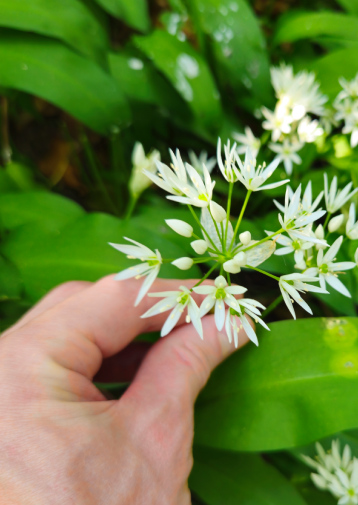
Dandelion. Nettle. Chickweed. Wild garlic. Sorrel. Elder. Hawthorn. Sloe. Mushroom after mushroom.
The list grows faster than your confidence. But you don’t need to know hundreds of species to become a capable forager.
Trying to absorb too much information at once makes everything blur together. Worse, it can make you feel as though you are always behind.
Foraging isn’t a race to collect plant names. A few plants you genuinely recognise are worth far more than a long list you only vaguely remember.
2. Mistaking Information for Knowledge
You can read about a plant for an hour and still not recognise it confidently outdoors. That’s because knowing about a plant and knowing the plant are different things.
A description might tell you that the leaves are hairy, the flowers appear in spring and the stem has a particular shape. Useful information.
But then you meet the actual plant.
It’s smaller than you expected. The leaves have been nibbled. The flowers haven’t opened yet. It’s growing among twenty other species.
Suddenly, the neat description in the book doesn’t feel quite so neat.
Real knowledge develops when information meets experience. Use books, websites and other resources. Just don’t mistake reading about plants for having learnt them.
3. Looking for the Answer Before Observing
Identification apps have made it incredibly easy to point a phone at a plant and get a suggestion. That can be useful.
It can also become a bad habit.
If you immediately ask an app what something is, you can skip the most important part of identification: looking closely yourself.
Before reaching for your phone, take a moment.
What do you actually notice? What does the leaf arrangement look like? What is the stem doing? Where is the plant growing? Is it flowering? What features make you think it might be one species rather than another?
You don’t need to identify everything unaided. But your own observation should come before the answer.
An app can give you a name. It can’t build your familiarity with the plant for you.
4. Treating the Internet as an Authority
Search for almost any wild plant and you’ll find conflicting information.
One website recommends eating it. Another gives a warning. Someone on social media says they’ve eaten it for years. Someone else says never to touch it. And now with AI, it’s even more difficult to trust someone.
This can leave beginners paralysed.
The solution isn’t to find the person online who sounds most confident. Learn to judge the quality of the information itself.
Who is providing it? Are they clear about identification? Do they explain preparation? Are they distinguishing between species and growth stages? Do they acknowledge uncertainty? Do they have experience with the plant rather than simply repeating something found elsewhere?
Choose your sources carefully. Look for real knowledgeable people and avoid faceless AI guides. Then stick with them long enough to understand their approach.
5. Making “Can I Eat It?” the First Question
When you discover a new plant, it’s tempting to immediately ask whether it’s edible. But that question can put the cart before the horse.
First ask:
What is it?
Then:
Am I certain?
Then:
Is this the right part, at the right stage, from the right place?
Only after that should eating enter the conversation.
This sounds obvious, but the order matters. If your first instinct is always to turn an unfamiliar plant into food, you can start viewing the landscape primarily as a collection of ingredients.
Foraging becomes much richer when identification comes before extraction.
You begin noticing plants whether they are edible or not. And strangely enough, that makes you a better forager.
6. Thinking Confidence Means You Know
This is an important one.
A confident beginner isn’t someone who identifies everything correctly. A confident beginner knows when to leave something alone.
Sometimes a plant won’t be at the right stage. Sometimes the specimen will look unusual. Sometimes two species will be too similar. Sometimes you simply won’t have enough information.
Don’t take it as failure. That’s just good judgement.
The dangerous habit is feeling that you must decide, but you don’t. There is no prize for eating the plant you were only 90% sure about. “I don’t know” is one of the most useful things a forager can learn to say.
7. Picking More Than You Need
Another common beginner mistake is measuring success by the size of the harvest.
You find a patch of something edible and suddenly you’re filling bags. It feels productive.
But what happens afterwards?
Do you know how to use it? Will you actually eat it? Was that much necessary?
Foraging isn’t about how much you can take.
A small harvest that gets used well is more meaningful than a large harvest that ends up forgotten in the fridge. Taking less also gives you the chance to observe the plant rather than immediately turning it into a resource.
Leave plenty behind. Think about what the plant, insects and other wildlife might need. And remember that abundance is something to assess, not assume.
8. Expecting Every Trip to Produce Food
This one is easy to overlook.
Beginners sometimes feel that a successful foraging trip should end with something edible in their bag. But nature doesn’t work to your timetable.
Maybe everything is past its best. Maybe the weather has changed things. Maybe you don’t recognise anything confidently. Maybe you simply aren’t in the right habitat.
You can have a worthwhile foraging walk without picking a single thing.
You might notice a plant you’ve never seen before. Spot the first flowers of the season. Watch a hedgerow change. Realise that something you thought was one plant is actually another.
These things matter.
If every walk has to produce food, you can start making poor decisions simply to justify the trip.
The Better Way to Build Confidence
The answer to these mistakes isn’t more pressure. It’s better habits.
Learn to notice before you identify. Learn to identify before you harvest. Learn to question before you trust. Learn to leave something behind when you’re uncertain.
And most importantly, accept that becoming good at foraging takes time. You will forget names. You will confuse plants. You will find yourself staring at something you are certain you’ve seen before and suddenly knowing absolutely nothing about it.
That’s normal.
The difference is that, over time, those moments become less frequent. You start recognising patterns. You become better at noticing useful features. You become more comfortable with uncertainty. And you develop a much better sense of when something is worth picking and when it isn’t.
That’s what real confidence looks like.
Not knowing everything.
Knowing enough to make good decisions.
A Simple Test for Your Next Foraging Trip
Before picking something unfamiliar, pause, and ask yourself:
Do I know exactly what this is? What features am I using to identify it? Could I be confusing it with something else? Am I certain enough to eat it? Do I actually need to harvest it?
If any of those answers make you hesitate, leave it. You can always come back.
There will be another plant. There will be another season. There is no need to force the decision today.
That small pause can become one of your most useful foraging habits.
Conclusion
The biggest beginner mistake isn’t not knowing enough. It’s believing you need to know everything before you can trust your own learning.
Foraging confidence develops differently. You learn something. You observe it. You question it. You make mistakes without taking unnecessary risks. You learn a little more.
Then you do it again.
Eventually, the landscape becomes less like a wall of unfamiliar green and more like a collection of old acquaintances. You recognise what belongs. You notice what has changed. And you know when something doesn’t look right.
That’s when foraging starts to feel less like guessing and more like knowing.
And perhaps that is the real goal. Not becoming someone who can identify everything. Becoming someone who knows when to pick, when to pause, and when to walk on.
If you’d like to keep developing that kind of practical knowledge, subscribe to my newsletter for seasonal plants, thoughtful foraging advice and a closer look at the wild food growing around us.