Foraging often feels harder than it really is. Not because the plants are impossibly complicated, but because beginners are often given too much information too soon.
Plant lists, identification rules, safety warnings, recipes, legal questions, lookalikes. All useful, but taken together, they can make the first step feel enormous.
But you don’t need to know everything before you begin.
Start Foraging Close to Home
The best place to begin is usually much closer than you think.
You don’t need a secret woodland, a rare plant or a free weekend. Foraging can begin on a footpath, park edge, hedgerow or patch of ground you already know.
In fact, familiar places are often the best places to start. They give you reference points. You already know how the area looks, so you can begin noticing what changes within it. That is where foraging really begins.
Slow down. Look around. Start noticing what is already there.
Before you pick anything, spend some time simply observing.
What shape are the leaves? How are they arranged? What does the stem look like? Does the plant grow upright or trail along the ground? Is it growing alone or in a group?
Smell the leaves. Feel their texture. Look at the plant from different angles. Then come back another day. Notice what has changed.
A plant that seemed like an anonymous patch of green starts to become recognisable. You notice when it appears, when it flowers, when it fruits and how it changes as the season moves on.
You just need to begin well. And beginning well means starting small, close to home, and with your senses switched on. It is about learning to notice. The food comes later.
Learn Plants Before You Learn Uses
Most beginners want to know what they can eat. That makes perfect sense. Food is one of the great rewards of foraging.
But if you start with recipes, it is easy to think of wild plants as ingredients rather than living things that need to be identified properly.
Instead, choose one plant at a time. Learn where it grows. Learn what it looks like at different stages. Notice its leaves, stem, flowers, fruits and smell. Pay attention to the habitat around it.
Then keep coming back.
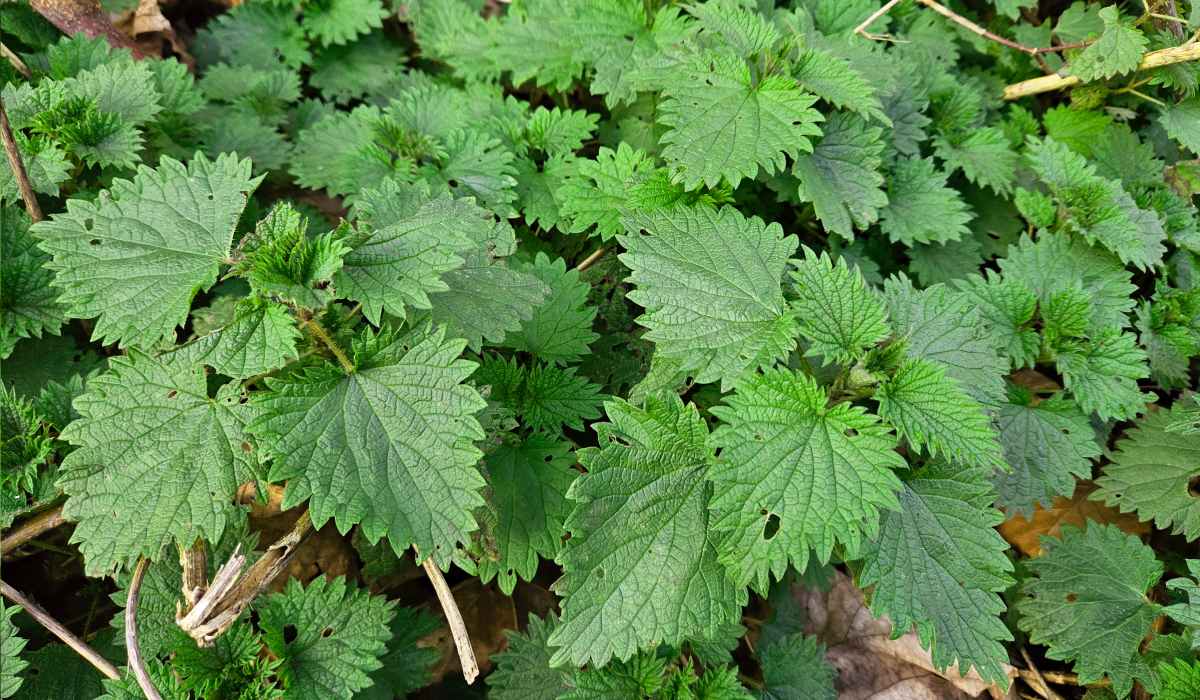
You are not trying to memorise a description from a book. You are building a mental picture through experience. There is a big difference between thinking, “I think that’s nettle”, and recognising a plant without hesitation because you have seen it dozens of times.
Confidence comes from repetition, not speed.
Your First Practical Steps in Foraging
When you’re new to foraging, the hardest part is often knowing what to do first.
So forget about learning fifty plants.
Start with one.
These steps are not a race or a checklist to complete as quickly as possible. Think of them as a framework you can return to with every new plant you learn.
1. Choose one common, abundant plant
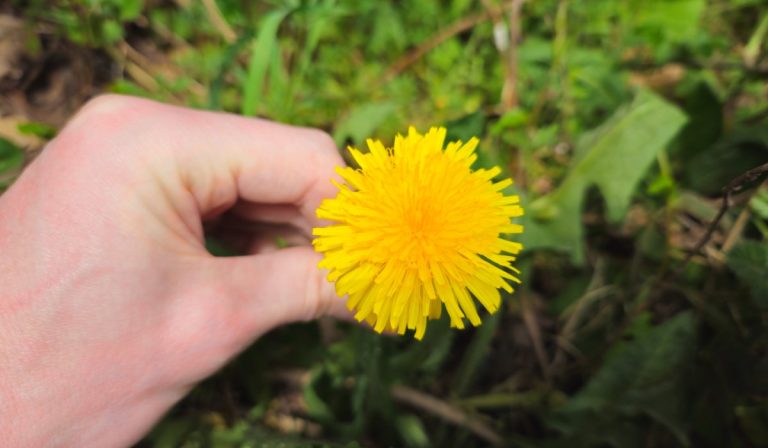
Start with something you can find easily in your area, such as nettle, dandelion or bramble.
You may think you already know them. But do you really?
– Could you identify it without the flower?
– Could you recognise it when it is young?
– Could you distinguish it from a similar species?
Most people recognise a common daisy flower, but far fewer could identify the leaf without hesitation. Recognition is deeper than familiarity.
2. Observe it across several walks
Don’t try to learn everything from one encounter.
Visit the plant again. Look at the leaves. Examine the stem. Notice the flowers or fruits when they appear. Pay attention to its smell and the way it grows. Watch how it changes through the season.
Think of it like recognising a friend in a crowd. The more familiar you become with the details, the easier recognition becomes.
Eventually, you stop searching for the plant. You simply see it.
3. Use a trusted guide to confirm identification
This is where good resources matter.
Avoid relying on a single social media post or an identification guess from a stranger online. Enthusiasm can look remarkably similar to certainty.
Apps can be useful for generating possibilities when you are not sure, but they get things wrong sometimes. But most important, they should support your learning, not replace it. So, if you want to keep your judgement, I would delete it straight away.
Use reliable field guides, trusted books, reputable resources, local walks or an experienced mentor.
Cross-check important identifications, particularly when edible plants have poisonous or potentially harmful lookalikes. And remember the most useful phrase in a forager’s vocabulary: “I’m not sure.”
If you are not certain, you do not need to prove anything. Leave the plant where it is and keep learning.
4. Build confidence through repetition
Confidence does not come from collecting more information. It comes from seeing the same information in the real world again and again.
Take photographs. Keep notes. Sketch if that helps you notice details. Revisit the same places through the seasons. Record when plants first appear, when they flower and when they fruit.
Eventually, your knowledge starts connecting. You stop seeing isolated facts and start recognising patterns.
That is when foraging becomes much more intuitive.
5. Only harvest when you are completely sure
This is the line that should never become blurry.
If you are not completely confident about the identification, don’t eat it.
Learn the important poisonous lookalikes for any plant you intend to harvest. Check more than one reliable source where appropriate.
If there is doubt, leave it. There is no prize for bringing home something you cannot identify properly. The plant will still be there another day, and there will always be another opportunity to learn.
6. Take a small amount and keep it simple
Once you are certain of your identification and the plant is suitable for harvesting, start small. You do not need armfuls of leaves or a basket overflowing with wild food. A small amount is enough to learn.
Bring it home. Smell it again. Look at it closely. Then try it in a simple preparation that suits the plant.
A quick blanch. A little seasoning. Something familiar with a small amount of the wild ingredient added.
You are not trying to create a restaurant dish. You are learning what this particular plant tastes like, how it behaves in the kitchen and whether you actually enjoy eating it.
Once those foundations are solid, you can start exploring more plants, more habitats and more interesting ways of using them.
Basic Foraging Tools You Actually Need
You don’t need much equipment to begin.
A reliable field guide is more useful than an expensive basket. Something for taking notes can help too. A phone works perfectly well for photographs and observations (though it distracts from paying attention), while a small bag or container is enough for modest harvests.
Books serve different purposes. Some are designed for identification, others for wildflowers, mushrooms, coastal species, cooking or inspiration. Start with the basics and choose resources that are relevant to the plants and habitats you actually encounter.
ID Apps, fancy knives and specialist baskets can come later. They are just tools, but your real tools are attention, patience and good judgement.
Foraging Safety and Responsibility
Foraging is not simply about what you can eat. It also means thinking about where you are picking, what you are picking, how much you are taking and whether you have permission to do so.
– If you’re unsure, don’t pick.
– If an area may be contaminated, choose somewhere else.
– If a plant is scarce or growing in a sensitive habitat, leave it alone.
– If you are unsure about the legal position, check it before harvesting.
Learning about responsible foraging, the Foraging Code and foraging law in Britain is part of becoming a capable forager. But you do not need to absorb everything on your first day. Learn steadily.
The more you practise, the easier it becomes to make good decisions without having to consciously think through every single detail.
Learning Foraging Slowly and Safely
There is a temptation to measure a foraging trip by what you bring home.
Try measuring it differently.
What did you notice? What did you recognise? What did you learn?
Some days you will come home with food. Other days you will come home with a photograph, a new question or a better understanding of a plant. Both count.
Foraging is not a skill you collect like badges.
It is a relationship you build with plants, places and seasons. The aim is not to find something every time you go outside. The aim is to notice more than you did last time.
That is where real confidence comes from.
Where to Go Next
If you are ready to go a little deeper, the Start Here page gives you the wider map.
You can explore the principles behind responsible foraging, learn about safety and identification, and find your way into more specific topics as your confidence grows.
But you do not need to consume it all at once. Choose one plant. Find it. Sit with it. Learn it.
Then come back next week and see what has changed.
That is how you begin.
Now, subscribe below if you’d like to keep learning, noticing and foraging with me.