
Foraging is a rewarding pursuit, but doubts about foraging law can often cloud the experience, even after mastering plant identification. Where is foraging allowed? Can I harvest wild fruit from street trees? Is it illegal to pick wild garlic?
British foraging law isn’t clear-cut and one must be aware of it. Knowing where the law actually sits isn’t about fear or restriction, it’s about foraging calmly, responsibly, and without second-guessing every step.
This guide sets out what the law really says, plainly, practically, and without drama, so you can forage with confidence, stay on the right side of the law, and keep your relationship with the land intact.
What Can I Legally Forage?
UK foraging law starts with a single, often-misquoted piece of legislation:
Section 4 (Property) of the Theft Act (1968) (England and Wales) (though similar in Scotland)
“subsection (3) A person who picks mushrooms growing wild on any land, or who picks flowers, fruit or foliage from a plant growing wild on any land, does not (although not in possession of the land) steal what he picks, unless he does it for reward or for sale or other commercial purpose.”
In plain terms, this means you’re allowed to pick wild plants and fungi for personal use without it being classed as theft. This is where the familiar four F’s come from: fruit, flowers, fungi and foliage. If it’s cultivated, a crop deliberately planted or managed, permission is required, as taking cultivated plants without consent is theft.
The law here is narrow, and that’s important. It deals with theft: not access, not conservation, and not good judgement. It also doesn’t give blanket permission beyond those four categories.
Seaweed, for example, sits outside the Theft Act and is governed by different rules. Protected species are covered by separate wildlife legislation, regardless of who owns the land.
So while the Theft Act allows personal foraging in principle, it doesn’t answer the whole question. The words “any land”, and “although not in possession of the land”, are doing a lot of work here.
Which brings us neatly to the next point.
Where Can I Legally Forage?
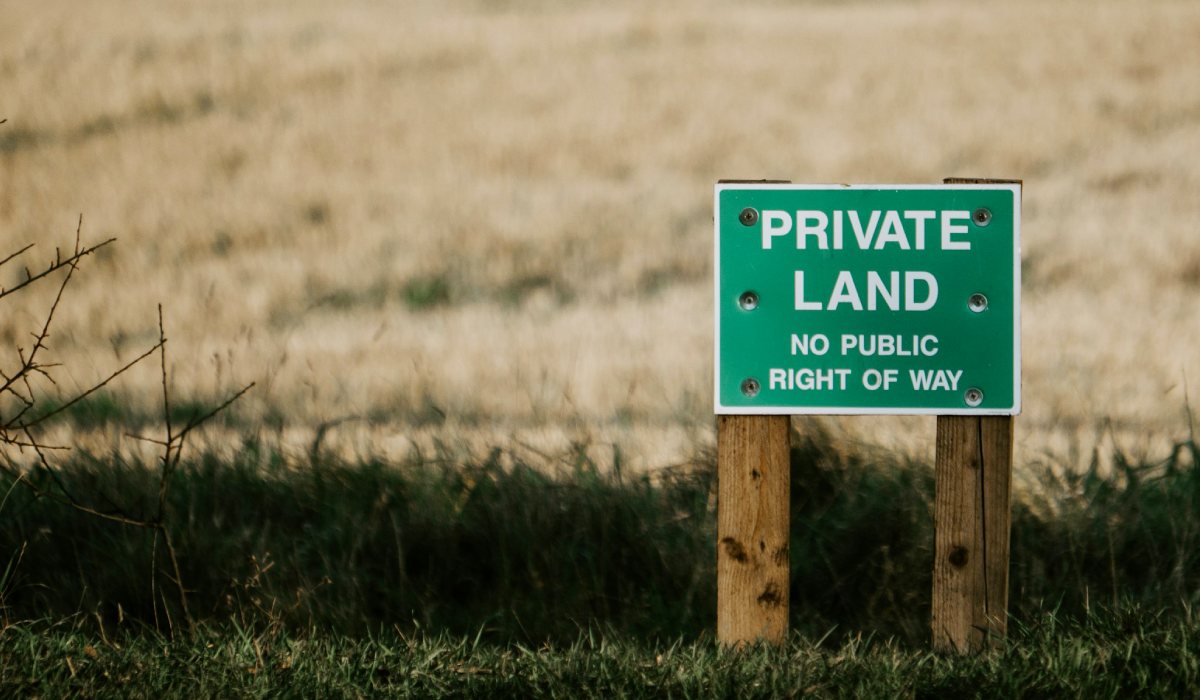
You can pick wild plants and fungi for personal use, but there’s an important distinction: lawful picking ≠ automatic access. Permission is still required to enter private land. Without it, you could be trespassing, even if the plants themselves aren’t considered stolen.
Picture this: you’re picking blackberries in a quiet hedgerow without asking the landowner. Technically, you haven’t committed a criminal offence under the Theft Act. But you are on private land without consent, which is a civil wrong.
If the landowner comes across you, they cannot take your basket: the fruits of your foraging belong to you. You do, however, need to leave promptly.
This balance, respecting property while staying on the right side of the law, is at the heart of responsible foraging.
Private Land in the UK
Bear in mind that most land in the UK is privately owned. Don’t assume a city park, a hedgerow, or even a field with a footpath is common land. Often, you’re on private property where access is granted, not guaranteed, and rules may apply.
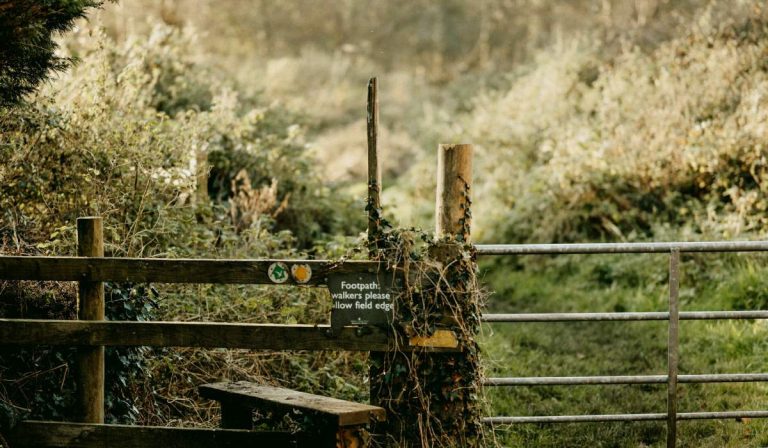
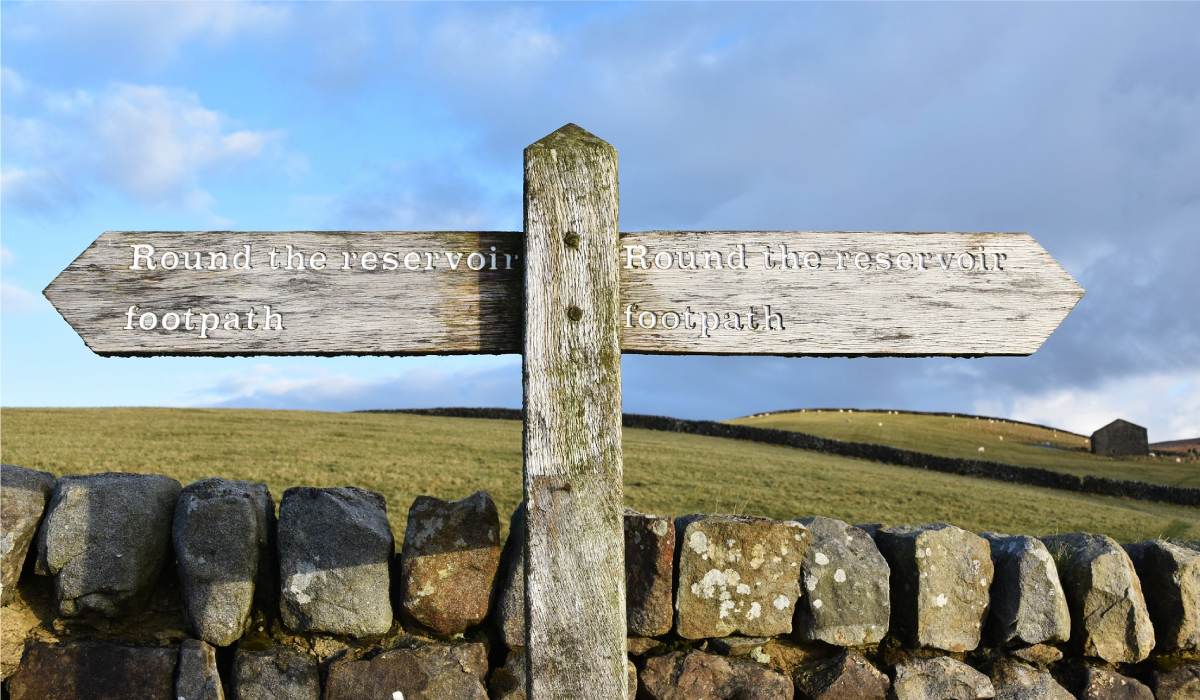
Farmland is usually private land, but you’ll often find public footpaths, and sometimes bridleways or byways, winding through it. These paths give you the right to pass through, but not to stray off them to pick plants without permission. Observing the Countryside and Rights of Way Act 2000 (CROW) and local signage will keep you on the right side of the law.
You can access a public map of rights of way here to check paths, open land, and public access before heading out.
Think of it like this: you can enjoy the landscape (and perhaps pick something within the path), but the law expects respect for both land and its owner.
Can I Pick Fruit From Street Trees And Shrubs?
Most roads, country lanes, and the adjoining verges are owned by the Highways Agency or local authorities, while pavements are usually owned by the local council.
Technically, you don’t have an automatic legal right to pick fruit from these trees or plants growing on council land. That said, for small-scale, personal use, like a few berries or a handful of herbs, it’s generally tolerated, as long as you exercise common sense: don’t strip a tree bare, damage the plant, or leave litter behind.
In Scotland, the Land Reform (Scotland) Act 2003 provides a broad “right to roam,” allowing access to most land for recreational or educational purposes. But even there, rights are conditional on responsible behaviour: you must respect property, avoid damage, and follow any local guidance or restrictions.
When in doubt, a polite ask or a quick check with the local authority never hurts. It keeps foraging friendly, legal, and low-stress.
CROW Act and Right to Roam
Foraging in England and Wales is shaped not just by the Theft Act, but also by the Countryside and Rights of Way (CROW) Act, 2000.
This law grants public access to designated areas of open land: uplands, downlands, heath, mountains, and any land a landowner has voluntarily opened to the public.
Access is intended for recreational purposes, which includes walking, exploring, and enjoying nature. But it does not give carte blanche to pick, uproot, or damage plants. In practice, Scotland offers broader access, but not broader permission to remove plants, especially in protected areas.
The law reflects this distinction clearly:
“Section 2(1) does not entitle a person to be on any land if, in or on that land, he –
(l)Intentionally removes, damages or destroys any plant, shrub, tree or root or any part of a plant, shrub, tree or root.”
In plain terms: you can walk, look, and admire, but picking plants without permission on access land is generally not allowed.
One common point of confusion: rights of way that cross CROW land are not included in the designation. Walking along a public footpath that runs through access land gives you the usual right of passage, and, in some cases, the ability to forage from the path itself, but not from the wider CROW-designated land unless specifically allowed.
Think of it as a layered system: access is granted for recreation, but respect and restraint are the rules that keep it legal.
Local Byelaws Restricting Foraging
Before heading out, it’s worth checking for any local byelaws. These rules can be found by:
-
contacting the local council,
-
reading posted signs, or
-
consulting official online resources.
Byelaws are set by local councils, National Trust sites, and conservation bodies such as Natural England, Scottish Natural Heritage, the Countryside Council for Wales, and the Northern Ireland Environment Agency. They may restrict foraging, camping, fires, or other activities that could harm wildlife or the environment.
Public Spaces Protection Orders (PSPOs) can also impose restrictions on particular public spaces where a council considers them necessary. For example, Rugby Borough Council currently has a PSPO covering Newbold Quarry Nature Reserve which prohibits visitors from removing or displacing trees, plants, shrubs, fungi or parts of them.
Some examples illustrate how these rules work in practice:
-
Royal Parks of London (Hyde Park, Richmond, St James, Greenwich, Kensington Gardens) explicitly prohibit “interference with any plant or fungus” which effectively rules out foraging.
-
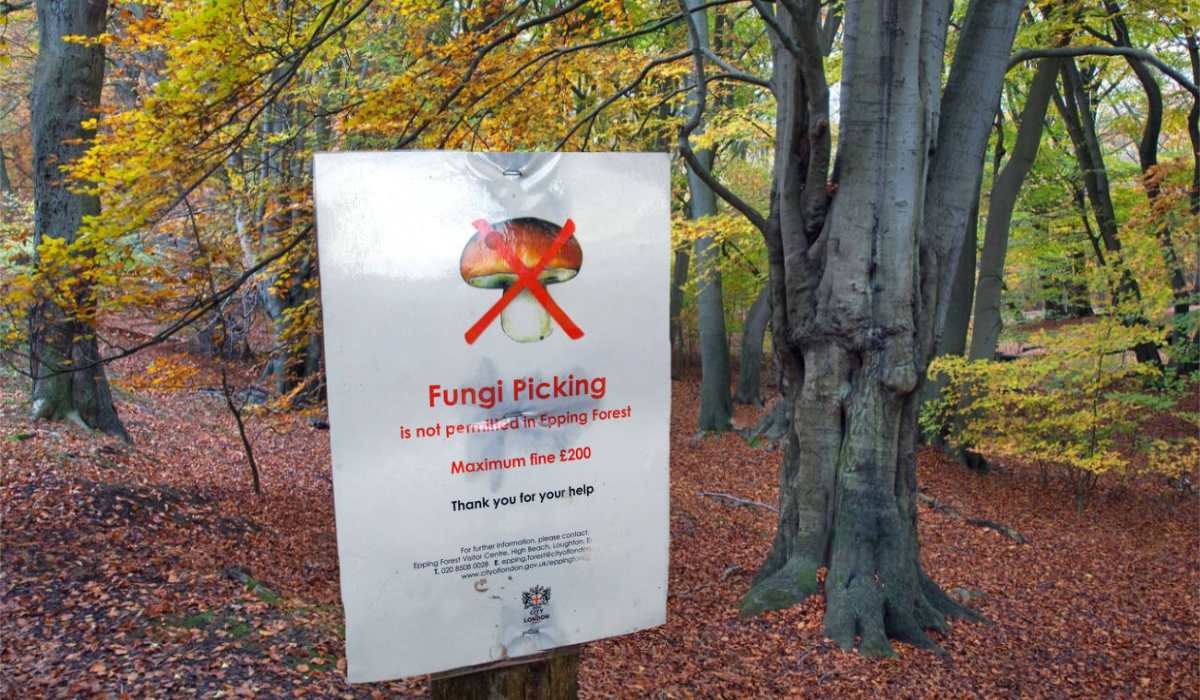
Epping Forest has its own byelaws around foraging after claims about commercial-foraging becoming a problem, although there’s no evidence of widespread illegal activity.
-
New Forest signs placed by the Forestry Commission, advise against mushroom picking. Legally, however, foraging for personal use is still allowed, and any attempt to confiscate goods you’ve gathered lawfully could itself raise legal issues.
The key principle is simple: local regulations can override general access rights, particularly in reserves or conservation areas. Checking them first ensures your foraging is both legal and responsible, while helping you stay on good terms with land managers. You can usually find the details through your local council or online.
Sites of Special Scientific Interest (SSSI’s) and Natural Reserves
SSSIs and SACs are scattered across the UK, each with unique characteristics and ecological importance. Some are privately owned with no public access, while others welcome visitors for recreational and educational purposes.
A site is designated as an SSSI by bodies like Natural England, Scottish Natural Heritage, the Countryside Council for Wales, or the Northern Ireland Environment Agency, to protect areas of ecological importance, including habitats, plants, and wildlife.
In England and Wales, SSSIs are governed by the Wildlife and Countryside Act (1981). In Scotland, the Nature Conservation (Scotland) Act 2004 provides similar protections.
In England, every Site of Special Scientific Interest (SSSI) notified by Natural England comes with a site-specific list of activities that cannot be done without written permission from Natural England (and the landowner).
These are legally called Operations Requiring Natural England’s Consent (ORNECs). You must notify and obtain consent before carrying out any of these operations within an SSSI boundary. Historically, similar lists were referred to as different names like Operations Likely to Damage (OLDs) or Potentially Damaging Operations (PDOs), especially on older SSSIs.
Those lists often include removing plants, digging, or disturbing habitats. In England, these lists are available from Natural England, either on request or checked online. Legal action is only possible if authorities can prove that damage has occurred to ecologically significant species, but the ORNECs or PDOs serve as a clear warning: foraging may be restricted or prohibited.
In Scotland, the rules are stricter: collecting wild plants or fungi in a National Nature Reserve (NNR) or SSSI is illegal without permission from both Scottish Natural Heritage and the landowner.
I know all of this can sound overwhelming, so here’s a quick tip. Ask ChatGPT to look at the actual designated features of the SAC or SSSI you’re enquiring about, then check the ORNEC list for the specific plants or mushrooms you’re looking to pick. It should be able to find the original sources and show you exactly which restrictions and consent requirements apply to that particular site.
You also might wonder about National Parks. In general, picking plants for personal use is allowed, and some conservation organisations even encourage responsible foraging. But the usual caveats apply: avoid protected species, stick to low-impact foraging, and follow local rules.
Endangered & Invasive Plant Species UK Law
Some plants and animals are legally protected under ‘Schedule 8’ of the Wildlife and Countryside Act (1981).
It is a criminal offence to intentionally damage, remove, or disturb these species, and this applies to everyone, including landowners.
While we don’t recommend foraging any Schedule 8 species here, it’s important to be aware they exist. Careless foraging could inadvertently damage a protected plant or habitat.
The ‘Red Data List‘, maintained by the International Union for Conservation of Nature (IUCN), tracks rare species and their extinction risk, from “vulnerable” to “critically endangered.” If a species appears on this list, avoid picking it entirely.
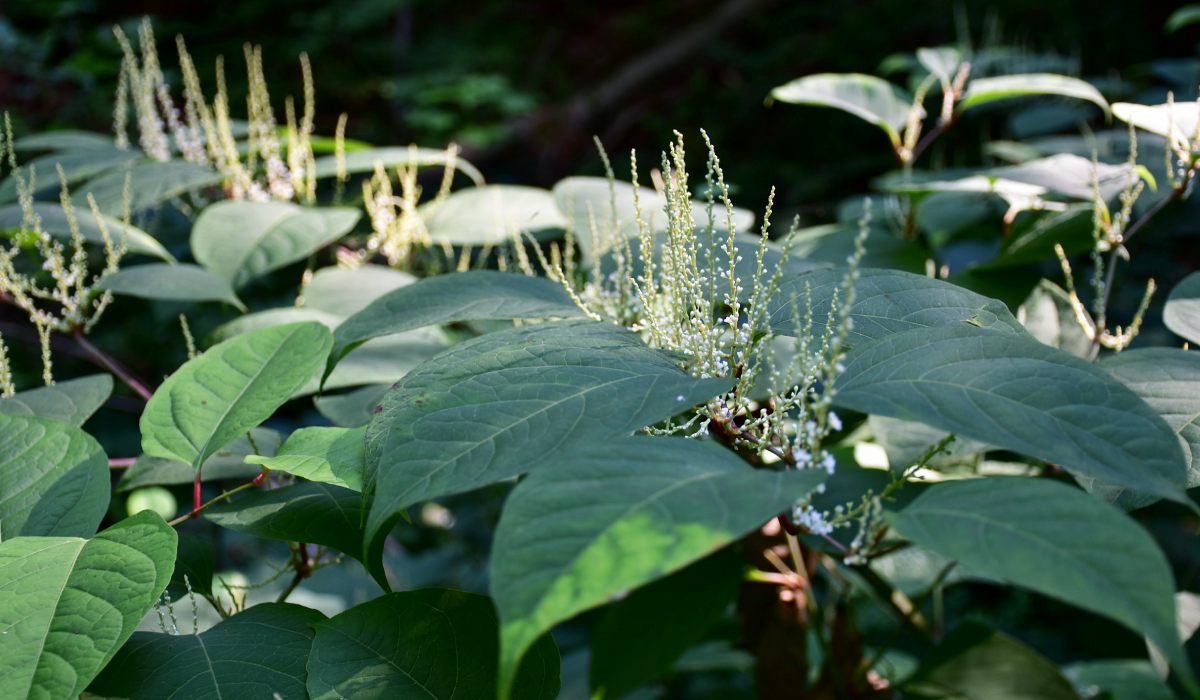
Some non-native and invasive species are also heavily regulated. Collecting, propagating, or spreading them is illegal, because they can harm the environment, economy, and public health.
Take Japanese knotweed, for example, it can damage buildings and infrastructure, and removing it legally and safely is costly and complicated. Before you forage, it’s wise to know which invasive species to avoid and stick to plants that are safe to harvest.
Is it Illegal to Dig Up Plants in the UK?
Yes. This is one of the clearest points in UK foraging law.
Under the Wildlife and Countryside Act (1981):
“if any person […] not being an authorised person, intentionally uproots any wild plant not included in that Schedule, he shall be guilty of an offence.”
In practical terms, you may not uproot wild plants without permission from the landowner or occupier.
For the purposes of the law, uproot means to “dig up or otherwise remove the plant from the land on which it is growing.” That protection applies broadly. In Northern Ireland, the same rule is enforced under the Wildlife (Northern Ireland) Order, 1985.
What does this mean on the ground? It means roots are off the menu unless you have permission. Even common plants, like dandelion, burdock or dock, can’t be dug up legally without consent.
Leaves, flowers, fruit, and fungi may be fair game in the right context. Roots are different. The law draws a firm line there.
Is Commercial Foraging Allowed?
Stories about widespread commercial foraging for restaurants crop up regularly in the press. They’re usually based on anecdote rather than evidence. While local issues do occur, there’s no reliable proof of a national-scale problem.
Legally, the line is clear. Under Section 4 (Property) of the Theft Act (1968), picking wild plants or fungi for sale or reward without the landowner’s permission is theft. This applies regardless of quantity, intention, or destination.
Commercial foragers therefore work in one of two ways: they either own the land, or they have explicit permission from the landowner to harvest from it.
There is no such thing as a commercial foraging licence in the UK. Permission from the landowner is the key requirement, alongside compliance with conservation law, byelaws, and protected species legislation.
In short: commercial foraging is legal, but only with consent, care, and clear boundaries.
What Knives Are Legal to Carry in the UK?
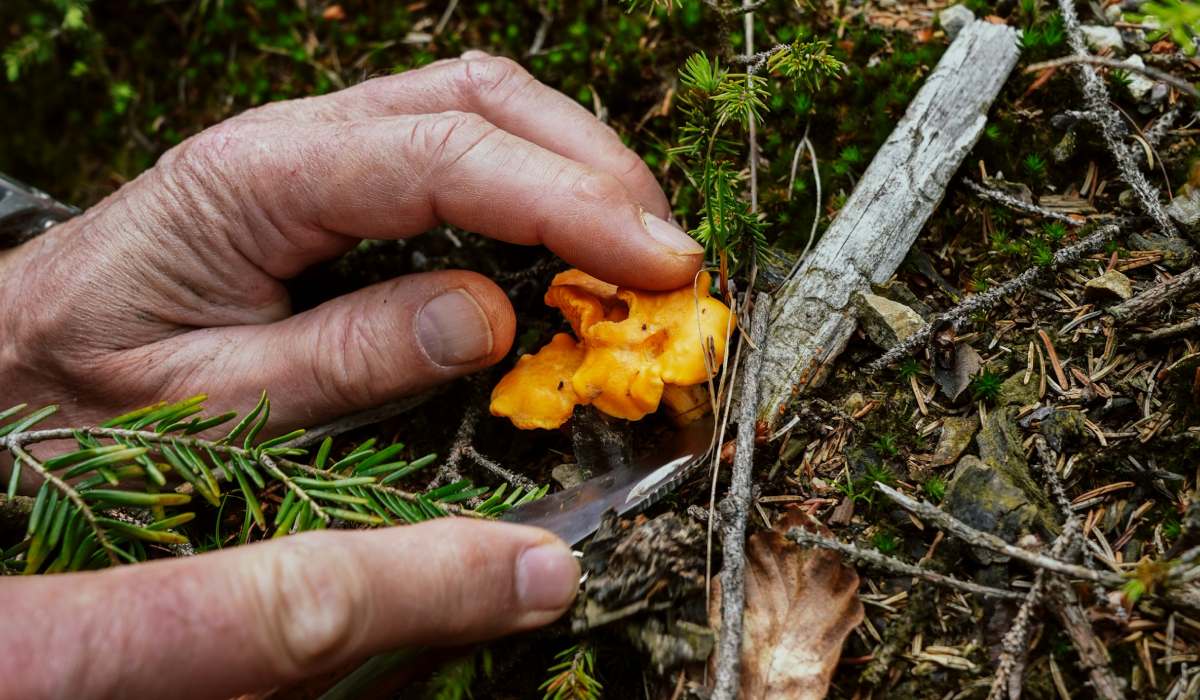
When foraging for fungi, a knife can be useful for making a clean cut over the base of the mushroom. Naturally, people worry about whether carrying one could land them in trouble.
Under the Criminal Justice Act 1988:
“It is illegal to carry a knife in public without good reason, unless it has a folding blade with a cutting edge 3 inches long or less”.
So before slipping that fancy Opinel into your pocket, your knife must be:
-
a folding (non-locking) knife,
-
with a cutting edge of 3 inches (7.62 cm) or less.
A small, non-locking folding knife, such as a Swiss Army–style knife, can be carried without needing to give a reason. Locking knives, even small ones, are treated differently and generally should not be carried without a clear, lawful reason.
Foraging may be accepted as a good reason in context, but discretion lies with the police, and, like the rest of us, they’re human. Keeping things simple avoids uncertainty.
A modest folding knife, used quietly and appropriately, is usually all you need. Carrying a field guide or basket makes your purpose clear, without needing explanation.
Disclaimer
A quick note before you head out.
This guide is written from the perspective of a passionate forager, not a legal professional. It’s intended to clarify, not replace, the law. While the information here is well-grounded and carefully checked (and triple checked), it isn’t the final word.
For complete certainty, always refer to the relevant legislation and official government guidance, especially if you’re unsure. Laws can change, and they differ across the four UK nations. The Isle of Man and the Channel Islands operate under their own legal frameworks.
A little checking keeps your foraging legal, responsible, and confident, which is exactly how it should feel.
Final Thoughts
Foraging law can feel awkward at first, but it isn’t something to fear. With a little grounding, it becomes background knowledge, quietly supporting what you’re already doing.
The principles are simple: respect the land, follow local rules, and leave places as you found them. Do that, and you’ll stay well within the law while keeping ecosystems intact.
Foraging is one of the most direct ways to reconnect with the living landscape around you. Move slowly, pay attention, and check restrictions when needed. And if this piece helped, you might enjoy the newsletter below!

23 thoughts on “Is Foraging Legal in the UK? A Clear Guide to British Foraging Law”
I do not understand why anyone is encouraging people to take our wild flora! Has our wildlife not suffered enough damage at the hands of man (in the older non gendered sense). It is not good for our flora and fauna, people are digging up plants. I say on one forum someone said, ‘a pig nut, I hadn’t seen one in years, so I dug it up to take home and eat it’! Why? No wonder you haven’t seen one in years! Encouraging people on an overpopulated wildlife stressed land is just irresponsible! There is no need whatsoever to take our wild flora. By encouraging people to forage, you inevitably encourage people to do it irresponsibly. It’s just maths just 10% of people are doing it irresponsibly then encouraging more people to forage makes that 10% a bigger number, and you get individuals appearing on TV making it look like a ‘very wholesome thing to do’ and they often do not understand the dangers nor do they care. Sure, I can see it’s fine for one or two people to take a few leaves but, encouraging a whole nation to do is not one or two leaves. I get that you’ve laid out the rules but, you are inevitably encouraging people to do it wrong because people don’t take in this amount of information and retain it. People are clearly left with the impression, the sound bite that taking from wild is a good thing when it is absolutely not! I ask you, what are you hoping to gain by encouraging people to take our wild flora?
Hi Jim,
I don’t know where you get your food from. Personally, I prefer harvesting abundant wild dandelion leaves from local grasslands for my salad rather than opting for lettuce leaves packaged in non-compostable plastic, cultivated in the arid regions of southern Spain, and transported with a significant carbon footprint. Opting for local sources for our food makes logical sense; otherwise, we risk encouraging not only an entire nation but an entire continent to rely on vegetable supplies grown in southern Europe, where vast areas of the local landscape have been destroyed to keep up with international demand.
I consistently advocate for responsible foraging and provide specific resources on my website to help individuals incorporate this practice into their lives. However, I struggle to understand how I bear responsibility for the choices made by a select few who may behave irresponsibly. Such thing is beyond my control.
I encourage you to delve deeper into this topic by reading the following article, where I elaborate on these ideas further: https://flatcapforager.com/why-foraging/
I still think I will check with a local council member or experienced local forager in my case as I have been given a foraging class but they were still unclear what is allowed locally, for example a handful of pignuts is no problem but if I wanted to uproot dandelions from the green of our town park (as opposed to the paths and edge around it) I do not know whether the park counts as common ground.
Hi Dean, you must obtain explicit consent from the landowner before removing any wild plants from the ground, whether it’s dandelions or pignuts. However, it’s unlikely that anyone within your local council is well-versed in foraging laws, so it’s a bit of a grey area here.
Unfortunately, you haven’t correctly understood the UK law on carrying a knife in a Public Place within the UK. While you might get away with claiming the excuse that your Swiss Arny Knife is being carried for foraging, nevertheless, it has a “locking blade” which makes it illegal no matter what the length of the blade.
I suggest you re-read the Act and modify your statement about the Swiss Army Knife accordingly.
Otherwise, loved your article,
Ted
Hi Rick, thanks for the feedback, however I don’t think there is anything innacurate here. Not all Swiss Army Knives are legal in the UK, but you can still purchase the ones which are non-locking AND with cutting edge less than 3 inch. As long you follow the rules, they are completely fine and within the law.
Ted
The last Swiss Army knife I had was not lockable , where as Leatherman tool knives are .
I maybe wrong though .
Kind regards
Paul
Whilst noting fruit fungus etc, I found article difficient on foraging for wild which is surely an ancient right dating from medieval times and before. Trees naturally shed branches (or die completely) and foraging for firewood a an established activity. Certainly some woodlands are privately owned (thus trespass/theft laws apply), but most UK woodland is public (excepting royal forests) and public are surely permitted to forage for wood (especially in current era of fuel shortages/expenses)?
Hello Ian. there is a difference between “public woodland” and “open access to woodland”.
As mentioned in the article, many woods are private property that you are granted access to.
Further info here: https://whoownsengland.org/2020/11/02/who-owns-englands-woods/
This is really helpful, thank you Alvaro.
I found a case from 2016 where someone was fined for picking mushroom in Epping Forest even though the prosecution was happy it was for personal use: https://www.romfordrecorder.co.uk/news/crime/court-fines-collier-row-woman-caught-picking-mushrooms-in-ancient-3066598
Specific byelaws apply to Epping Forest in particular.
This page confuses byways and public footpaths. You can walk on public footpaths, bridleways, restricted byways, byways open to all traffic, permissive accesses (as posted by the land owner), or any road (whether metalled or not) except motorways, any of which can be locally prohibited by a Traffic Regulation Order.
Hi Mike,
That’s right, those terms are not interchangeable. I have reworded that paragraph to avoid further confussion.
Mnay thanks,
Alvaro
A common misconception about foraging promoted by the food and drug industry is that is dangerous from a food poisoning perspective. The human touch, smell and taste can naturally detect and avoid most toxic plants (with the exception of mushrooms which ARE dangerous from a food poisoning perspective which humans naturally have a phobia towards), and if you signal all clear, just eat an amount the size of a small fingernail. That way if the plant turns out to be toxic you are not overdosing. Unlike foraging, there is no natural defence mechanism against food poisoning from processed and unhealthy foods. There would not be any improvement in diet safety by avoiding foraging.
I tend to go after weeds or plants that grow easily or in abundant numbers when foraging. I don’t want to put threatened species in danger. You should be OK eating plants that are common and grow easily in the wild.
I agree, the land is for all & sundry & we are free to roam & forage as long as common sense is adhered to as not to over forage or cause destruction…
I know of a few local derelict gardens, which can be foraged, now I gained this knowledge…
We are also caretakers of the land, just like our forebears, they were never restricted before councils & governments came along…
I find it hard to comprehend that foraging is no longer taught in schools or by parents alike…
a human being is an animal the only one that cannot go or eat pick what they like. we have to ask another animal permission again. we also have to ask another animal if we can lay down and sleep when we are laboured and need rest. this also applies to drinking water. people say they own the land not so it belongs to all animals who have a right to live.
Well said. I always feel like that when we wild camp. It’s everyone’s land how can one person own what is everyone’s earth.
you wont mind me wild camping in your garden then.
No, you are welcome. As any other animal I’ll just fight for my aerial, so be prepared, compare your scratches to mine. If you are stronger in a fight of any field you may take my garden.
So, you’re a communist. I assume you’ll be fine with giving up everything you own, right? Because after all, you’re all for stealing from others. It’s only fair, right?!
My Garden is seed i have planted. so if you take that it is theft. I am talking wild seed and and weed plants. I hope you see where I am coming from now Thanks.
Thank you very helpful information.