Velvet Shank: Profile
Common names
Velvet Shank, Winter Mushroom, Velvet Foot, Coesyn Melfed (CY), Téli Fülőke (HU), Płomiennica Zimowa (PL)
Botanical name
Flammulina velutipes
Fungi family
Physalacriaceae (Honey fungus)
Distribution
Found in most parts of continental Europe as well as Asia, North America and North Africa. Common throughout the UK.
Where to find Velvet Shank
Growing on dead stumps and trunks of dead deciduous trees, especially elm, ash, oak and willow. Occasionally found on diseased living trees.
When to find Velvet Shank
Late autumn to winter.
How to identify Velvet Shank
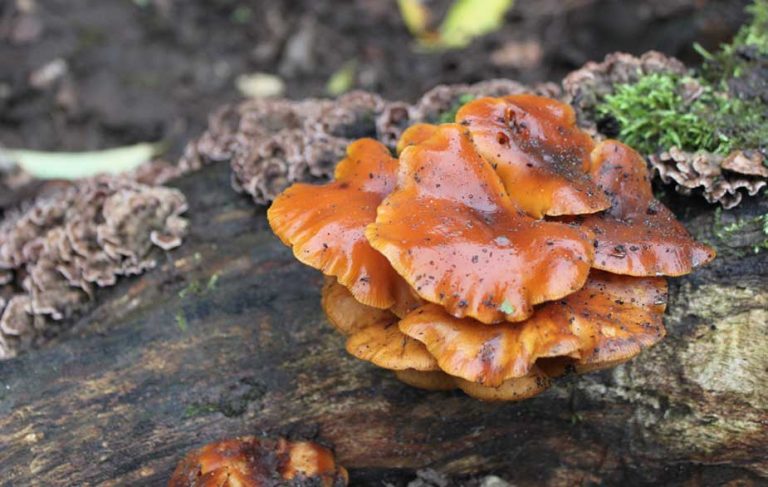
The Velvet Shank grows in tight clusters on dead wood. The cap is convex at first and becomes flatter and more irregular with age, Cap growth is often distorted due to close proximity to each other. The cap is caramel to orange in colour and darker in the centre.
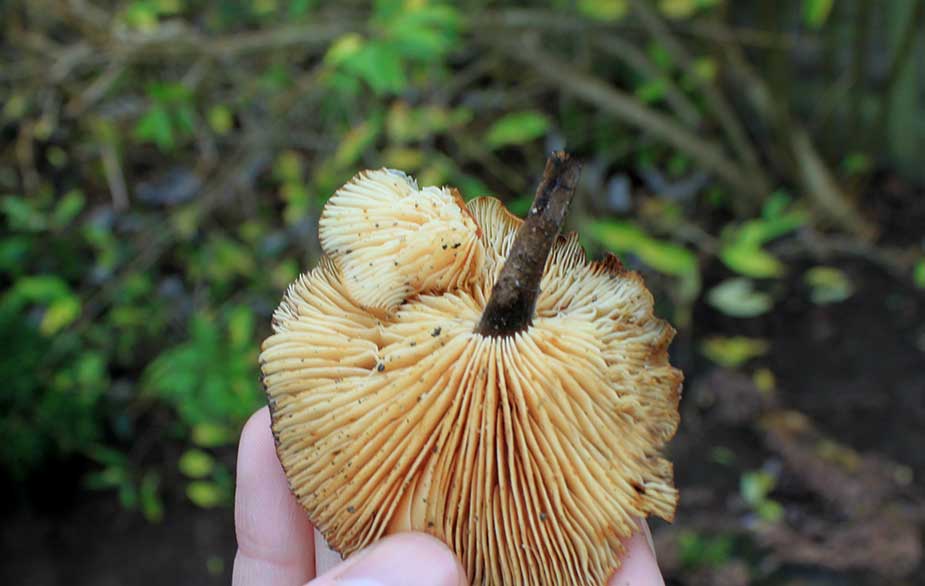
The surface of the caps is smooth and quite slimy when wet. Gills are broadly attached to the stem and are white in colour, becoming pale yellow with age. Flesh creamy brown. The stem is just a few mm thick and tough; which develops a velvety texture. The spore print is slightly off-white.
Velvet Shank lookalikes
Velvet Shank could be confused with the deadly Funeral Bell (Galerina marginata), but a skirt in the stem differentiates them, as well as a brownish cap and rust-brown spores. Their growing seasons rarely overlap, so it’s unlikely that you mix them up.
The Sulphur Tuft (Hypholoma fasciculare) is superficially similar to Velvet Shanks but features intense yellow-coloured caps and olive-green gills.
Sheathed Woodtuft (Kuehneromyces mutabilis) resembles Velvet Shank too but has darker gills and brown spores.
All about Velvet Shank
Also known as Winter Mushroom, this fungus is a little ray of hope for foragers during the coldest months of the year when there are just a few other edible mushrooms about.
In fact, the Velvet Shank is able to withstand extremely low temperatures and is not uncommon to see it fruiting throughout light snowfall, Surprisingly, it’ll continue growth after it has thawed from freezing!
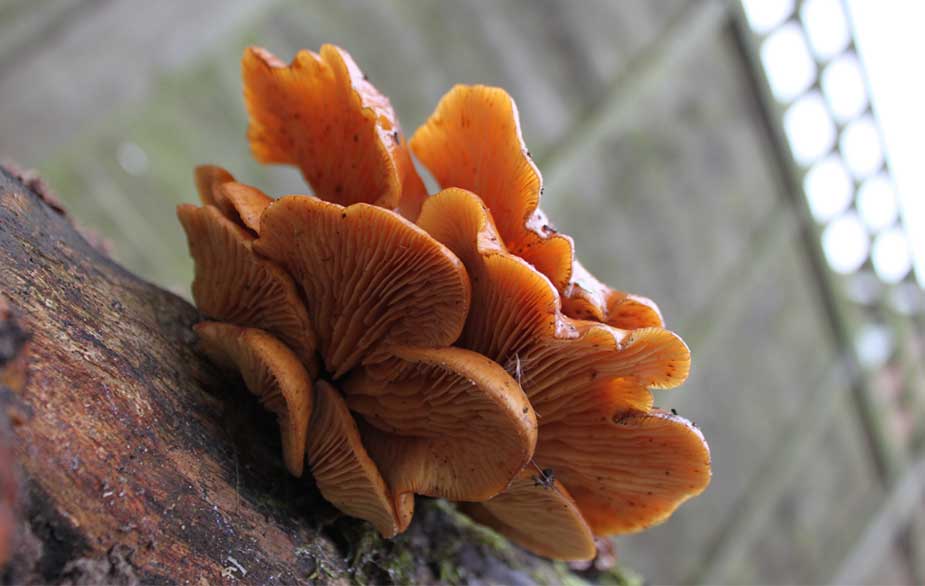
The clusters of bright caramel-coloured caps are easily spotted from a distance, often growing on dead wood in the winter months. The caps will often shine in wet weather, as they become slimmer with water.
Medicinal properties of Velvet Shank
Velvet Shank is being currently researched for potential anticancer activity, but there are no conclusive studies yet.
Culinary uses and recipes with Velvet Shank
Velvet Shank is a very good edible mushroom, with a sweet and nutty flavour and a slightly chewy texture. It’s great for nourishing soups, comforting casseroles and winter stews and matches game to perfection.
Alternatively, sauté with parsley and garlic or preserve in oil and vinegar for enjoying the rest of the year.
The fungi should be cooked before consumption and the stems are best discarded because they are tough and fibrous. Velvet Shanks hold their shape and colour in cooking
Safe foraging of Velvet Shank
There are no hazards known to eating Velvet Shanks, apart from possible confusion with other poisonous species.
Ecological importance of Velvet Shank
Just like other saprophytic fungi, the Velvet Shank breaks down organic matter and dead wood, recycling nutrients back into the soil. At the same time, it provides food and shelter for tiny woodland invertebrates.