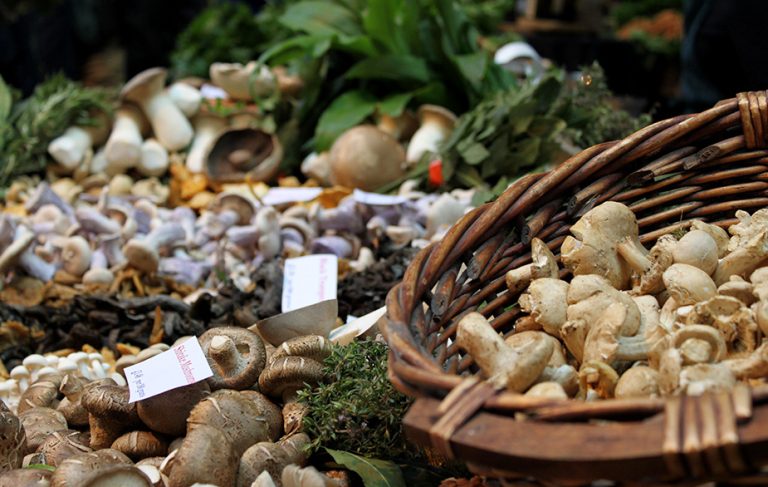
Walk into a supermarket and you’ll find almost every kind of food imaginable from across the world. Yet look for something growing wild locally and the choice suddenly becomes zero.
So, why aren’t wild foods in supermarkets?
The answer isn’t simply that they’re unpopular. Wild food actually doesn’t fit neatly into the system supermarkets are built around.
The Supermarket Isn’t a Full Catalogue
We tend to think of supermarkets as enormous collections of food. And, in one sense, they are. You can buy mangoes from Peru, blueberries from Chile, avocados from Mexico and apples grown in South Africa.
The choice can seem almost limitless. But look more closely and something becomes apparent. The supermarket isn’t a catalogue of everything humans can eat. It’s a catalogue of foods that can survive a very specific system.
A product needs to be available in sufficient quantities. It needs to reach the shop reliably. It needs to survive transport and storage. It needs to look acceptable to customers. Ideally, taste familiar. And preferably, available next week too.
This changes the question. It’s not really asking whether something is edible, nutritious or delicious. It’s asking whether it can be produced, transported and sold reliably at scale.
And this is where wild food begins to struggle.
Nature provides a vast range of edible plants, yet only a tiny fraction ever make it into the supermarket system. Not because the rest aren’t useful. Because they play by different rules.
Wild Food Doesn’t Run to a Schedule
A crop grows where we plant it. Wild food grows where conditions allow it.
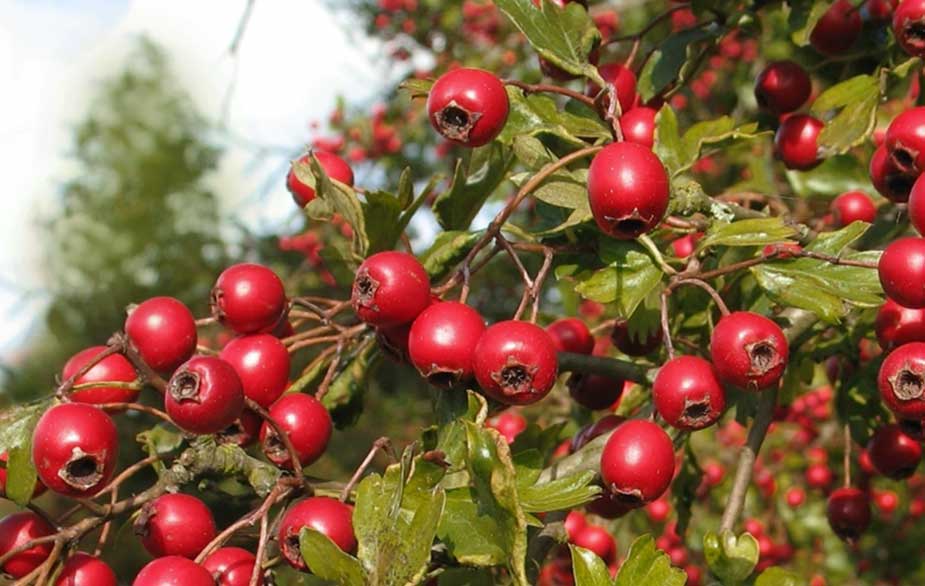
That might be a woodland edge, a hedgerow, a roadside bank, a field margin or a patch of disturbed ground. And those conditions change constantly.
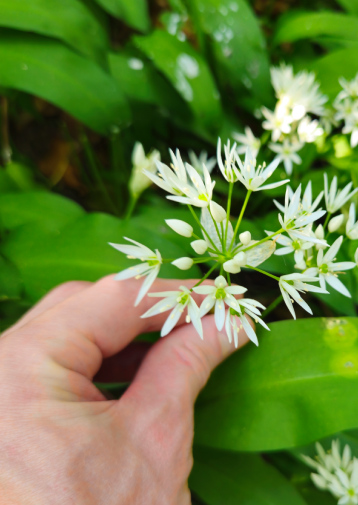
A warm spring might bring wild garlic earlier than expected. A dry summer can shorten a berry season. A wet autumn can produce a spectacular flush of fungi in one place and almost nothing a few miles away.
Even within the same species, plants vary.
One wild apple may be tiny and intensely aromatic. Another may be large and sour. One patch of nettles may be lush and tender. Another may be tough and fibrous.
For a forager, this variation is part of the fascination. For a supermarket, it is a problem.
You Can’t Easily Mechanise It
Industrial agriculture works because plants are organised around the machinery that harvests them. Rows are straight. Plants are spaced predictably. Fields are accessible. Crops mature within reasonably predictable windows.
Wild plants don’t care about any of this. Wild garlic grows under the trees. Blackberries tangle through hedges. Sorrel appears in between grasses. Nettles occupy awkward corners. Mushrooms emerge wherever conditions are right.
Harvesting requires someone to go looking. And not just anyone. Someone needs to recognise the plant, assess its condition, choose what is worth taking and leave enough behind.
That’s skilled labour. It is also slow labour. A person carefully picking wild plants one by one is difficult to compete with a machine harvesting thousands of identical crops in a field.
Wild food is abundant in places. It isn’t necessarily abundant in a form that can be industrialised.
Wild Food Doesn’t Travel Well
Then there is the journey from landscape to shelf.
Some wild foods are remarkably fragile. Wild strawberries can bruise almost as soon as you pick them. Tender greens wilt quickly. Many mushrooms deteriorate rapidly once harvested.
Compare that with a supermarket variety of apple. It has been selected partly because it can survive being picked, packed, transported, stored and eventually placed on a shelf without falling apart. That isn’t an accident.
Modern food systems reward durability. Thicker skins. Firmer flesh. Slower ripening. Longer storage. These characteristics make food easier to move around the country and keep available throughout the year.
But wild foods often give us something else. Freshness. Fragility. Seasonality. Character. The very things that make them interesting can make them inconvenient.
Wild Food Doesn’t Look Standardised
Now consider what we’ve come to expect from a supermarket. Apples that are almost identical. Carrots of similar size. Plums with consistent colour. Mushrooms neatly trimmed and packaged.
We’ve become accustomed to food looking uniform.
Wild food doesn’t usually cooperate. Leaves might have insect holes. Fruit comes in different sizes. Mushrooms can be muddy, misshapen or strangely beautiful. A wild plum might be smaller than the supermarket version but far more aromatic.
None of this necessarily tells you whether the food is good. But we’ve been trained to read visual consistency as quality.
The supermarket has taught us what food is supposed to look like. And wild food often looks like itself.
Then There Is Flavour
Wild food can be delicious. But it doesn’t always taste like the food we’ve been trained to expect.
Wild apples can be sharp and intensely aromatic. Wild plums can have acidity and tannin. Wild greens can be bitter. Some plants are pungent, resinous, peppery or surprisingly sour.
These flavours aren’t necessarily defects. They’re part of the plant. But mild, sweet and predictable flavours are easier to sell to a large population than something that requires a little curiosity.
Complexity is harder to market than familiarity.
This is one reason cultural preferences matter too. What people consider desirable food isn’t universal.
Some European cultures have retained a stronger appreciation for sour cherries, sharper plums, tannic fruits and other flavours that are less prominent in British supermarkets.
The plants didn’t change. Our expectations did.
The Supermarket Wants Food All Year
There is another fundamental mismatch.
Wild food is seasonal. The supermarket isn’t.
You can buy strawberries in winter. You can buy apples months after they’ve been harvested. You can buy salad leaves regardless of whether anything similar is growing outdoors.
This constant availability has become normal.
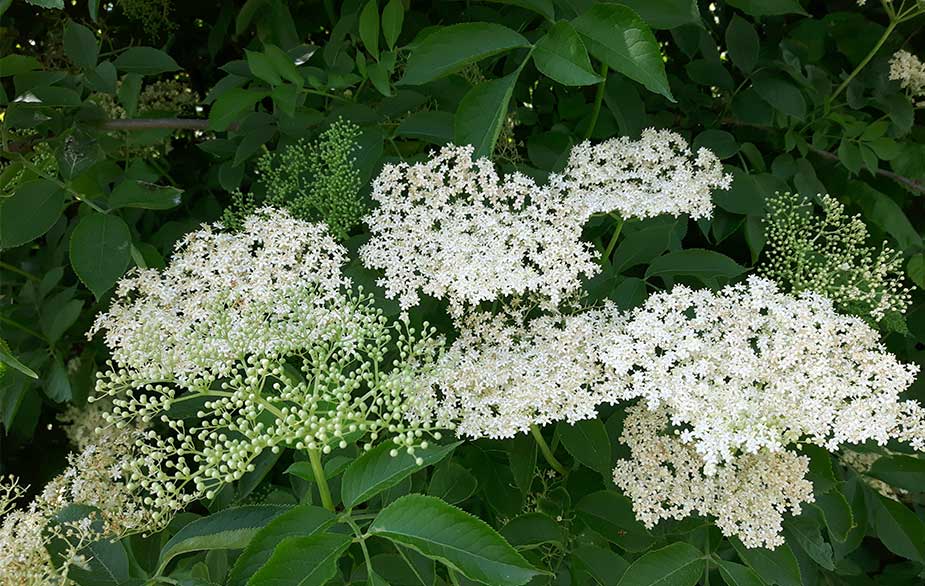
But wild plants don’t work that way. There is a moment when elderflowers are ready. A window when blackberries are perfect. A short period when a particular mushroom appears. Then the season moves on.
Foraging requires you to notice that window. The supermarket allows you to ignore it.
One system follows the seasons. The other tries to smooth them out.
Some Wild Foods Shouldn’t Be Scaled
There is another reason wild foods don’t simply become the next agricultural opportunity.
Not everything growing wild should be commercially harvested. Some species are protected by law. Some habitats are sensitive. Some populations are locally scarce.
And commercial demand changes the equation. Taking a modest amount from an abundant patch is very different from supplying thousands of customers every week.
UK foraging law law places various restrictions on what, where and how wild plants can be harvested, particularly where protected species, land rights or commercial collection are involved.
Abundance matters. Habitat matters. Scale matters. A wild food can be perfectly edible without being suitable for industrial exploitation.
What About Wild Mushrooms?
Fungi make the problem particularly obvious.
Some mushrooms can be cultivated very successfully. Others are much harder.
Morels and many boletes, for example, have complicated relationships with trees, soil, moisture and the wider ecosystem. Their fruiting depends on conditions that are difficult to reproduce consistently.
We can cultivate some fungi. But we cannot simply take every desirable wild mushroom and turn it into an agricultural crop.
And Some Wild Plants Are Too Successful
There is another strange category: edible plants that we probably don’t want to cultivate.
Ground elder and Alexanders are good examples. They’re perfectly capable of providing food, but encouraging their widespread cultivation would make little ecological sense.
In some situations, carefully managed harvesting of abundant non-native plants may form part of wider management efforts, but simply foraging an invasive species does not necessarily control it.
That creates an interesting reversal. Agriculture tries to protect crops from unwanted plants. Foraging can sometimes turn those unwanted plants into food. The same plant can be a nuisance in one context and a resource in another.
So What Is Actually Missing?
At this point, it might be tempting to conclude that wild foods simply aren’t suitable for modern food systems. But that isn’t quite right. Wild foods aren’t missing because they’re inferior. They’re missing because the system selects for different qualities.
The supermarket rewards:
- Consistency.
- Scale.
- Durability.
- Predictability.
- Uniformity.
Wild food tends to offer:
- Variation.
- Seasonality.
- Local abundance.
- Fragility.
- Ecological complexity.
The supermarket isn’t necessarily telling us what food is best. It’s telling us what food can successfully move through a particular economic system. And that’s a very different thing.
The Supermarket Creates a Strange Illusion
Think about this the next time you walk through the vegetable aisle.
You might see dozens of types of vegetables. It feels like enormous choice. But most of those vegetables belong to a remarkably small number of species.
Meanwhile, outside the supermarket, there may be dozens of edible plants growing within walking distance. The supermarket doesn’t show you those. Not because they aren’t there. Because they don’t fit the system.
That changes how you might look at the landscape.
A hedgerow stops being just a boundary. A patch of nettles stops being a nuisance. A woodland floor becomes a place where food might appear for a few weeks each spring.
The landscape starts to look different once you realise how much of it exists outside the supermarket’s definition of food.
This Is Where Foraging Becomes Interesting
Foraging isn’t about replacing the supermarket. It doesn’t need to be.
The supermarket is extraordinarily good at what it does. It gives us convenient access to a huge range of food, often at relatively low cost. But it also gives us a very particular relationship with food.
Food becomes a product first and a living thing second.
Foraging reverses that. You encounter the plant before you encounter the food.
You learn what it looks like.
You notice where it grows.
You begin to recognise when it appears.
You see what insects visit it.
You notice when the flowers become fruit.
You learn that one year can be completely different from the next.
Eventually, a blackberry is no longer simply a blackberry. It has a place. A season. A weather pattern. A hedge you know. A particular afternoon when you found it. You know where it came from because you were there.
Maybe We Are Asking the Wrong Question
So why don’t supermarkets sell more wild foods? Because most wild foods aren’t designed for the supermarket system.
They’re too seasonal. Too variable. Too local. Too fragile. Too difficult to standardise. And sometimes too ecologically important to exploit at scale.
But perhaps that leads to a more interesting question. Why do we assume the supermarket should contain everything worth eating?
The supermarket is not a catalogue of the edible world. It is a catalogue of foods that can be produced, moved, standardised and sold.
There is an enormous amount of food outside that system. Some of it is growing quietly along a hedgerow. Some of it is flowering in a woodland. Some of it is fruiting for only a few days. And some of it has been there all along.
Perhaps wild food isn’t missing from the supermarket. Perhaps the supermarket is simply missing from the wild food system. And once you start looking at the landscape that way, the world becomes a rather more interesting place.