
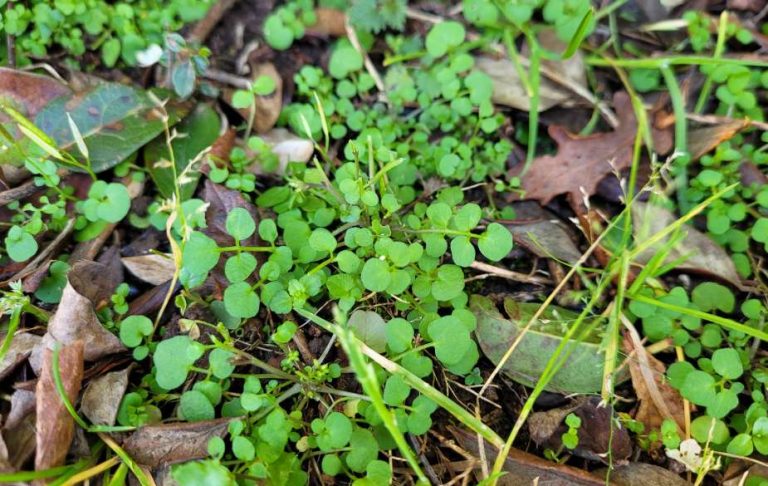
Hairy Bittercress: Plant profile
Common names
Hairy Bittercress, Hoary Bittercress, Lamb’s Cress, Flickweed, Flick Weed, Shotweed, Land Cress, Shot Weed, Spring Cress
Botanical name
Cardamine hirsuta
Plant family
Brassicaceae (Mustard)
Distribution
Hairy Bittercress is native to Europe and Western Asia, but it has now naturalized in many other parts of the world, including North America, Australia, and New Zealand. In Britain and Ireland, it is a very common plant.
Where to find Hairy Bittercress
Hairy Bittercress can be found in many different types of habitats, but it particularly likes damp, shady areas such as woodland edges, stream banks, and gardens.
When to find Hairy Bittercress
Hairy Bittercress is an early-season plant that can be foraged from late winter to early summer, depending on the location and climate. In cooler climates, it can be found as early as January, while in warmer areas it may not appear until March or April.
The plant tends to flower and go to seed in late spring or early summer, so it’s best to forage for it before this happens.
How to identify Hairy Bittercress
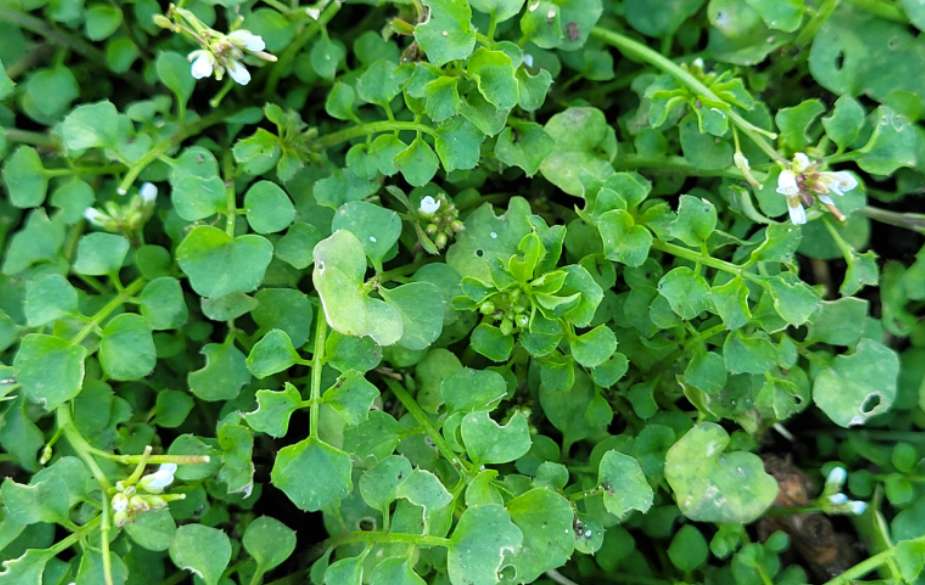
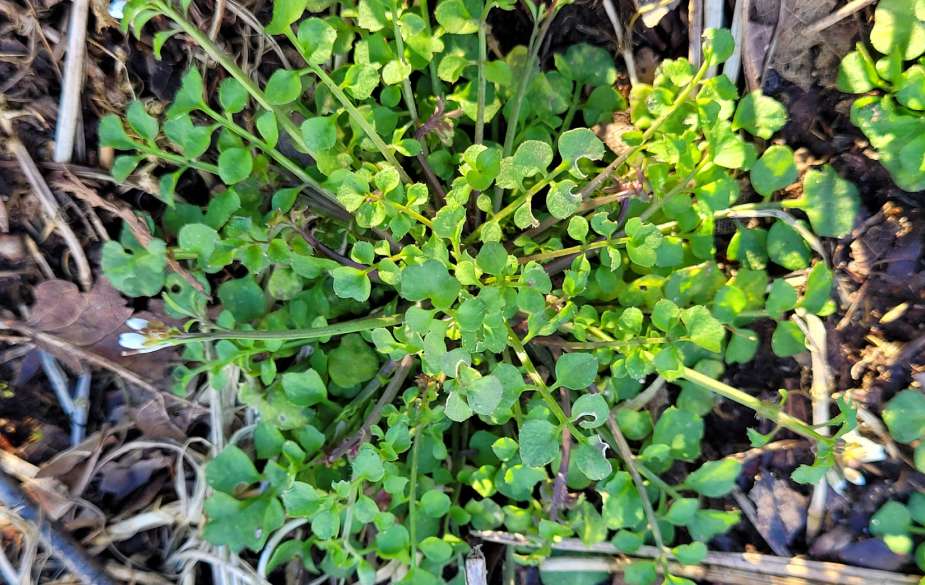
Hairy Bittercress is a petite, annual plant, reaching up to 30cm in height. Its compound leaves, adorned with small hairs, form a basal rosette around a central point. The slender, smooth stem supports tiny white flowers, each less than 1cm in diameter.
The flowers form clusters at the top of the stem and have four petals arranged in a cross shape. When the plant goes to seed, it forms small, elongated capsules that pop open when ripe, ejecting the seeds several feet away from the plant.
Hairy Bittercress lookalikes
Hairy Bittercress shares similarities with other mustard family members, such as Shepherd’s Purse (Capsella bursa-pastoris), distinguished by its heart-shaped seed pods, and it closely resembles Wavy-Bittercress (Cardamine flexuosa). All three are edible.
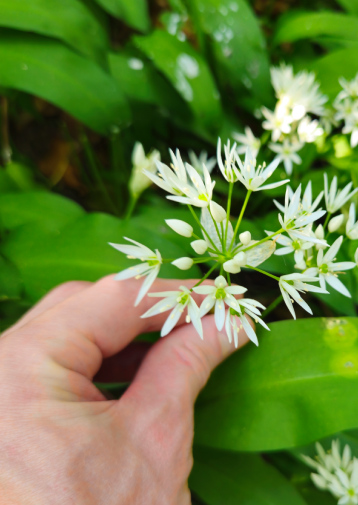
Another plant that vaguely resembles Hairy Bittercress is Common Chickweed (Stellaria media), which has similar-looking leaves but grows in a sprawling, mat-like habit rather than upright.
All about Hairy Bittercress
Hairy Bittercress forms attractive small rosettes of leaves, and multiple specimens can often be found growing together in clusters.
While gardeners may find Hairy Bittercress to be a persistent and unwanted weed, foragers welcome its presence as an edible plant that is available during the winter months.
Despite its somewhat unappetizing name, Hairy Bittercress is not actually bitter and has a slightly peppery taste. In fact, chefs have started to refer to it as “Land Cress” to make it sound more appealing.
Medicinal properties of Hairy Bittercress
Hairy Bittercress is a rich source of vitamin C.
Culinary uses and recipes with Hairy Bittercress
Hairy Bittercress is a versatile plant as all parts of it are edible, but the flower stalks can be quite woody. The leaves have overtones of rocket and watercress and form attractive little rosettes that make for great garnishes.
Hairy bittercress adds a peppery kick to a roast beef sandwich or spice up any salad. It also works well with scrambled eggs or mayonnaise, and can be used anywhere you would use raw cress, though cooking seems to remove the flavour.
Safe foraging of Hairy Bittercress
Hairy Bittercress is generally considered safe to eat and does not have any known hazards. Just rinse and wash the plant before consuming to ensure that the plant is clean and free from dirt or debris that may have become trapped in its leaves or stems.
Ecological importance of Hairy Bittercress
The flowers provide an early source of nectar for emerging pollinators such as bees and butterflies.
In addition, Hairy Bittercress has deep roots that help to improve soil structure and increase nutrient availability. The plant’s leaves also contain nitrogen, which can be released back into the soil as they decompose.
Sustainable Hairy Bittercress foraging
Hairy Bittercress is an abundant plant that reproduces quickly. Just follow usual foraging etiquette.

6 thoughts on “Hairy Bittercress”
Hi, I’m in Lexington, Kentucky and appreciate the information. It’s growing growing like crazy in between my pavers and wondered what it was. It’s easy to pull out though. Delicate roots. Native to Europe, huh. Well, so am I but I guess Hairy and I are here to stay so we’d better come to an understanding about these pavers. Maybe I’ll just snack on them while I water my flowers 🙂
Hi Kay, love this! Hairy’s clearly making itself at home. Good news is, it’s actually pretty good in sandwiches. You and your pavers might just learn to get along after all!
I wonder if this is best to harvest while flowering or before for medicinal/tea proposes?
Hi Jeannye, I’m not sure if it makes a massive difference, but I’d guess it’s best to use the leaves before the plant flowers. Once it starts flowering, the leaves tend to become a bit more tough and bitter, and the plant starts to shift its energy away from leafy growth.
Very interesting reading, I’ve got this growing in one of my outside plant pots.
Thank you.