Ribwort Plantain: Plant profile
Common names
Ribwort Plantain, Narrow Leaf Plantain, Narrowleaf Plantain, English Plantain, Buckhorn, Lamb’s Tongue, Ribleaf
Botanical name
Plantago lanceolata
Family
Plantaginaceae (Plantain)
Distribution
Ribwort thrives in various regions spanning Europe, North America, northern and central Asia, as well as Australia and New Zealand. Found all over the UK everywhere except the highlands of Scotland.
Where to find Ribwort Plantain
Thriving in alkaline soils and disturbed areas, ribwort plantain is frequently considered a common weed in fields, lawns, meadows, wasteground, canalsides, roadsides and other open spaces.
When to find Ribwort Plantain
Seek out leaves in springtime, while the bounty of seedheads reigns supreme until the arrival of autumn
How to identify Ribwort Plantain
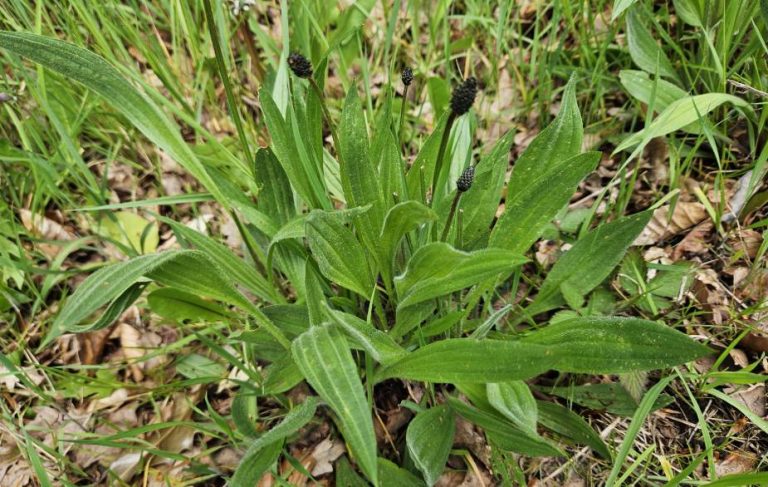
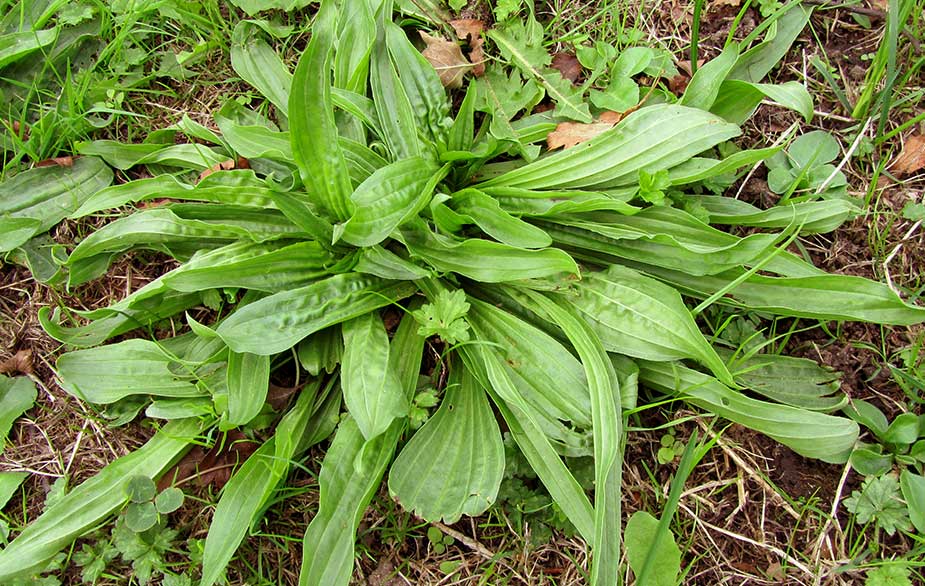
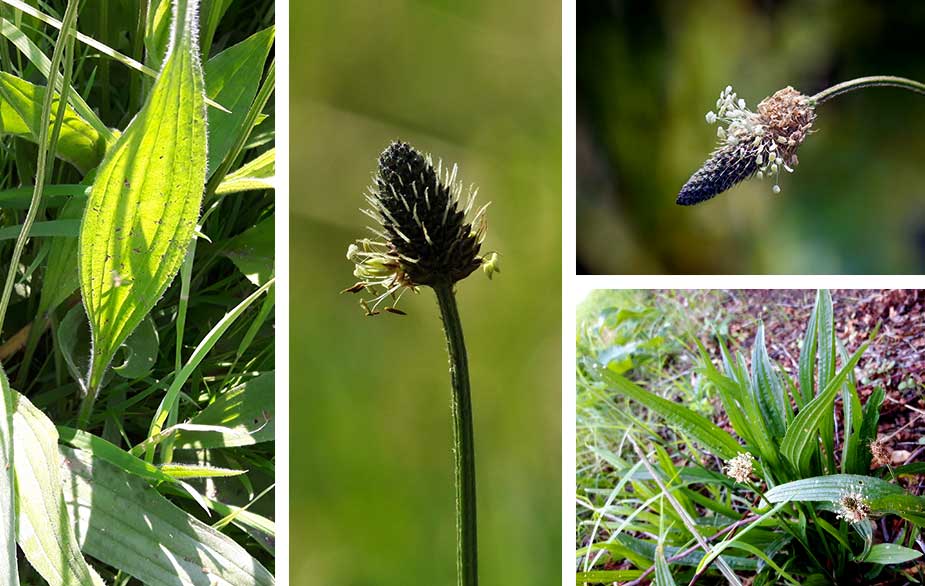
Ribwort Plantain forms a rosette of leaves. In areas left unmowed, the leaves stand erect, otherwise, they lie flat against the ground. Its slender, lance-shaped leaves sport a vibrant green hue, with three to five raised parallel veins adorning their undersides.
From mid-spring to summer, hairy, leafless flower stalks emerge, reaching 40 cm height. At the summit of the flower stalk sits a brown-coloured spike, from which individual brownish-white flowers dangle delicately on their own tiny stalks.
Ribwort Plantain lookalikes
You might mistake Ribwort Plantain for Hoary Plantain (Plantago media) or Broadleaf Plantain (Plantago major), but both of these have significantly broader leaves. Note that neither of those are poisonous.
All about Ribwort Plantain
Ribwort plantain is happy to make itself at home in all sorts of places, from busy city streets to quiet countryside corners. You’ll often come across it in fields, lawns, and roadside patches.
A rather common weed, though not particularly charming to look at, it serves its purpose in various ways. It’s surprisingly handy for medicinal uses and is edible too.
In folklore and symbolism, ribwort plantain has been linked to healing and protection. People once believed it possessed magical powers, such as warding off evil spirits or bestowing good luck. Its resilience and widespread presence have also prompted interpretations of endurance and perseverance.
Medicinal properties of Ribwort Plantain
Ribwort shares similar medicinal and edible properties with broadleaf plantain, though it tends to be slightly tougher, yet its seeds are larger and less mucilaginous, boasting a rich protein content with a nutty flavour.
Additionally, ribwort’s adaptability is evident in its diverse medicinal applications, used as an antihistamine, antifungal, antioxidant, analgesic, and mild antibiotic, effectively addressing a broad spectrum of health issues.
Furthermore, ribwort stands out as a vulnerary herb, renowned for its capacity to prevent external bleeding from cuts and bruises while promoting tissue repair. Its effectiveness extends to soothing nettle stings or insect bites.
Culinary uses and recipes of Ribwort Plantain
Ribwort leaves, though edible, have a bitter taste, requiring the removal of thick veins before eating. While they can be consumed raw or cooked, their fibrous nature makes raw consumption tricky unless finely chopped.
Younger leaves are less fibrous and can be dehydrated for stock or medicinal use on teas.
Unopened ribwort plantain flower heads offer a mushroomy taste, best harvested when green inside. Boiled, they create a tasty mushroom stock and are great for pickling too. Ribwort seeds, when ground, enhance the taste and nutrition of baked goods.
Safe foraging of Ribwort Plantain
Consuming excessive amounts of plantain can induce a laxative effect and potentially decrease blood pressure. Due to limited available data regarding its toxicity, it is advisable to refrain from consuming it during pregnancy, while breastfeeding, or for addressing specific medical conditions without consulting a healthcare professional beforehand.
Ecological importance of Ribwort Plantain
Ribwort plantain actively supports local ecosystems by serving as a food source for a variety of creatures, including rabbits, birds, moths, hoverflies, and butterflies. Notably, it sustains populations of the rare Glanville Fritillary butterfly, whose caterpillars rely on its leaves for nourishment.
Sustainable Ribwort Plantain foraging
Ribwort Plantain is an abundant plant that reproduces quickly. Just follow usual foraging etiquette.