
Japanese Rose: Plant profile
Common names
Japanese Rose, Beach Rose, Wrinkled Rose, Rugosa Rose, Ramanas Rose, Letchberry, Apple Rose, Saltspray Rose, Turkestan Rose, Sylt Rose, Rhosyn Japan (CY), Hamanasu / ハマナス / はまなす (JP), 해당화 (KO)
Botanical name
Rosa rugosa
Family
Rosaceae (Rose)
Distribution
This shrub originates from eastern Asia, spanning from the Russian Far East in the north to northern Japan, including the Korean Peninsula and northeastern China. It has become naturalised worldwide, including the UK and Ireland.
Where to find Japanese Rose
The Japanese Rose flourishes in a variety of habitats, ranging from sandy and rocky seashores to lush meadows, forest edges, and even roadsides.
Thriving in cold to temperate climates, it particularly thrives in coastal regions where it can benefit from higher humidity levels. Remarkably resilient, this species withstands harsh coastal conditions, including sea winds, salt spray, and soil salinity.
When to find Japanese Rose
Gather its fragrant flowers in early summer, adorning the landscape until the arrival of autumn. As the seasons shift, delight in the plant’s charming rosehips, maturing from the end of summer.
How to identify Japanese Rose
Ranging from 60cm to 2m tall, this rose features a prickled main stem and branches. Its dark green, wrinkled leaves, toothed and oval-shaped, are hairy beneath and bear large, purplish-pink, pleasantly scented flowers, often solitary or in small groups.
Come autumn, it yields dark red, tomato-shaped rose hips with tasty flesh and seeds. Remarkably, it often blooms and bears fruit simultaneously.
Wild Japanese Rose lookalikes
The UK hosts numerous species of wild roses, such as Dog Rose (Rosa canina), often resembling each other closely and posing identification challenges.
Additionally, cultivated garden varieties have occasionally naturalised in the wild. Fortunately, all these roses are safe for consumption.
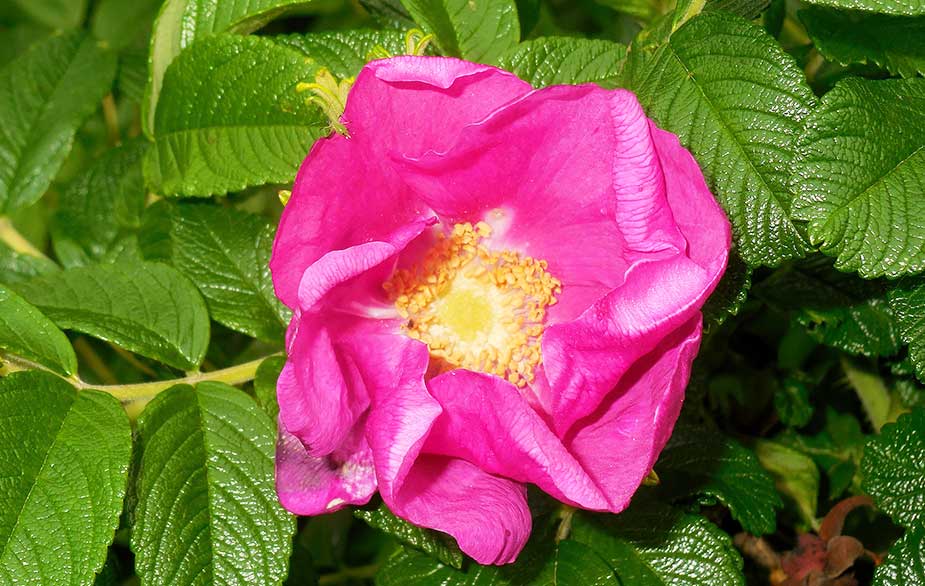
All about Japanese Rose
Native to the beaches of northern Japan, particularly Hokkaido, the Japanese Rose earns its name.
Introduced to the British Isles around 1800, it stands out for its vibrant pink flowers and large, bright red fruits, akin to large conkers.
Common in UK gardens and hedges, it’s cherished for its beauty, fragrance, and resilience. This versatile species readily hybridises with others and thrives in seaside conditions, making it a landscaping favourite.
Medicinal properties of Japanese Rose
Renowned for its high vitamin C content, the Japanese Rose boasts medicinal properties often used to alleviate symptoms of coughs and colds. It is commonly prepared as a syrup, offering relief and boosting immunity during periods of illness.
Some sources suggest that the seeds of the Japanese Rose are rich in vitamin E, offering potential health benefits. They can be ground into a powder and incorporated into flour or added as a dietary supplement, providing an additional nutritional boost.
Culinary uses and recipes of Japanese Rose
The fragrant petals lend themselves well to jams, jellies, cordials, and even wine, offering a floral essence to sweet treats. Traditional Chinese recipes incorporate them into flower jam and desserts, adding a delightful floral note to culinary creations.
Rosehips, prized for their sweet and fruity flavour, are perfect for jams, jellies, and syrups too, and their thick flesh adds extra richness. Additionally, they enhance cheeses, including fruity varieties like gruyere, and have been featured in sweet pickles by Noma.
Rosehip-based beverages can be very refreshing. Whether brewed into a fruity tea rich in vitamin C, crafted into a cordial for refreshing iced tea, or fermented into sodas or kombuchas, the versatility of rosehips extends beyond the kitchen.
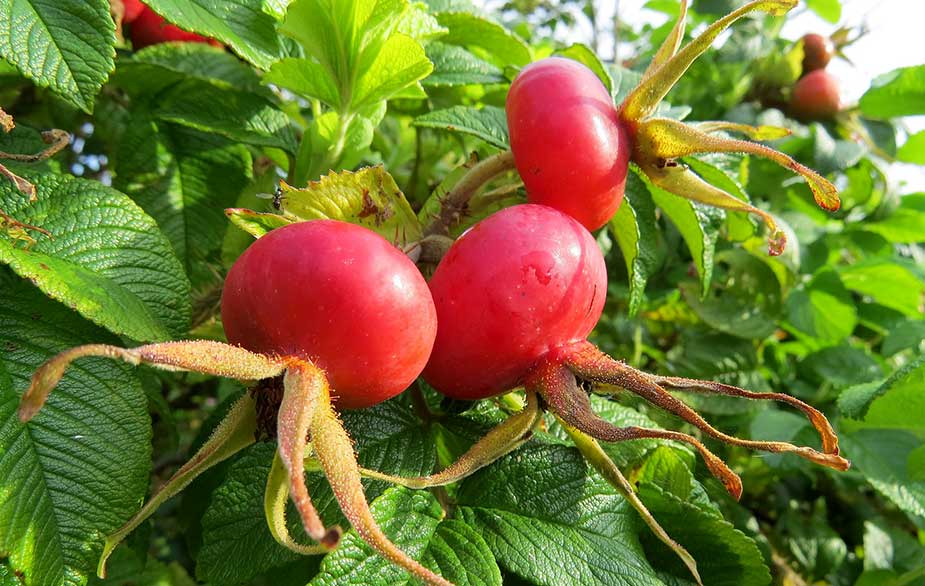
Safe foraging of Japanese Rose
Foragers should exercise caution due to the thorns on the Japanese Rose shrub. Make sure the rose bushes have not been sprayed, as they are commonly found in parks and gardens.
Additionally, the seeds are encased in tiny irritating hairs, both on the surface and just beneath the fruit’s flesh. Ingesting these hairs can lead to discomfort in the mouth, digestive tract, and even skin irritation
When dealing with rosehips, it’s important to handle them with care and diligently remove any irritating hairs during preparation.
Ecological importance of Japanese Rose
The Japanese Rose is categorized as an invasive species, posing a threat to native flora in some regions.
However, its remarkable salt tolerance renders it valuable for planting alongside roads requiring frequent de-icing, aiding in erosion control.
Moreover, it serves as a vital food source for pollinators, notably bees, while attracting aphids, which become prey for small birds, thus fostering a diverse ecological balance.
Sustainable Japanese Rose foraging
Roses are ubiquitous in the British Isles, but their widespread presence has also led to them being classified as invasive.
When harvesting their flowers, it’s still important to practice sustainable foraging. Avoid depleting a single bush entirely; instead, leave ample flowers for rosehips to develop in autumn. Likewise, leave some rosehips behind for wildlife.