
Nettle: Plant profile
Common names
Stinging Nettle, Common Nettle, Nettle Leaf, Neantóg (IE), Ortiga (SP), 异株荨麻 (yi zhu qian ma) (CH)
Botanical name
Urtica dioica
Plant family
Urticaceae (Nettle)
Distribution
Nettle is a plant species that is native to Europe, Asia, Northern Africa, and North America, but it has also been introduced to other regions. It is widespread in the United Kingdom and Ireland.
Where to find Stinging Nettle
Stinging Nettle can typically be found growing in woodland edges, wasteland areas, and on hedgerow banks.
When to find Stinging Nettle
Stinging nettle leaves are most tender and flavourful when they are young, making early to late spring the ideal time for harvesting them.
In addition, the plant undergoes a second growth phase in early to mid-autumn, providing another opportunity for harvest.
How to identify Stinging Nettle
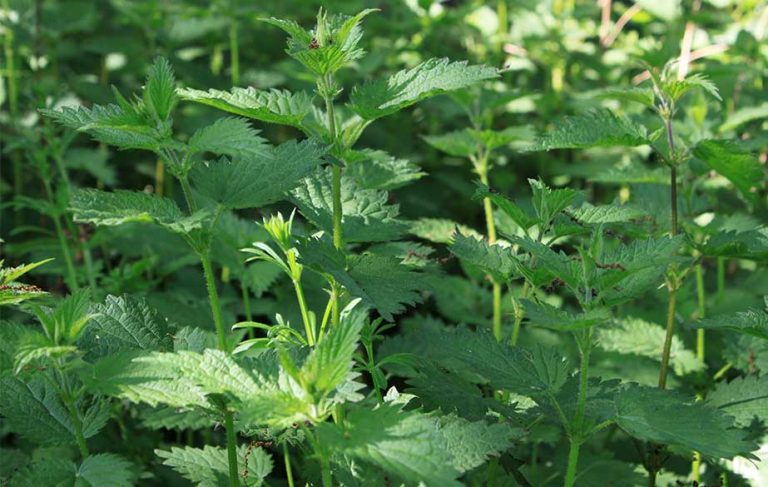
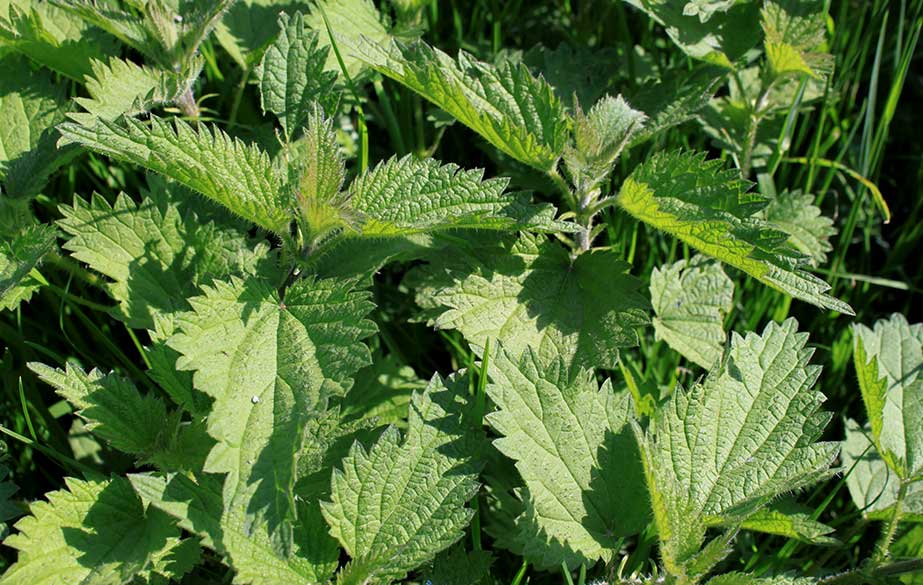
Stinging Nettle is an upright herbaceous perennial that can grow up to 1 meter in height. Its leaves are triangular with serrated edges and are dull green in colour, growing in pairs on opposite sides of the stalk.
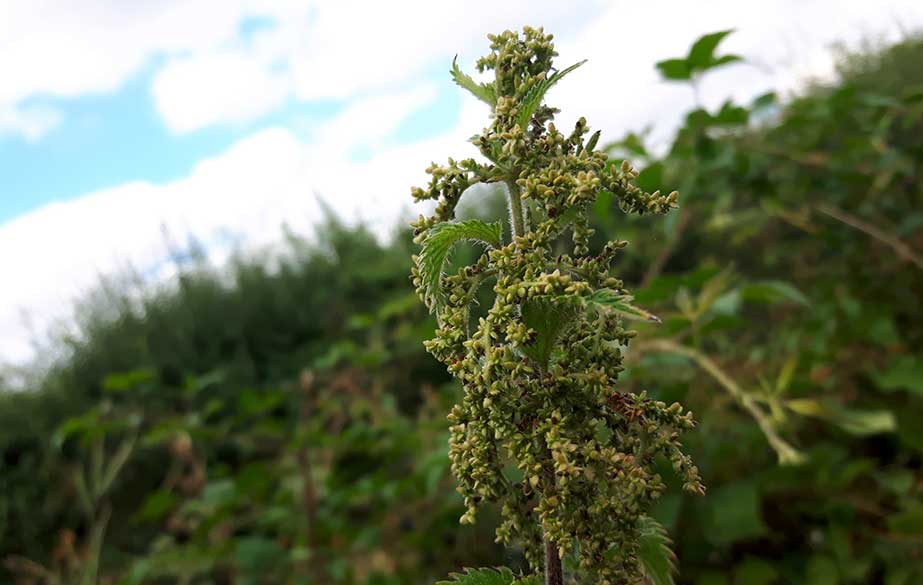
The plant produces discrete, catkin-like flowers that have no petals and are green in colour. Both male and female flowers are produced on the same plant. The plant also produces clusters of seeds that are similar in appearance to the flowers.
Stinging Nettle lookalikes
It’s worth noting that there are other plants in the Nettle family that may resemble nettles but are non-stinging.
One example is the White Deadnettle (Lamium album), which has leaves and stems that look remarkably similar to nettles but does not have stinging hairs.
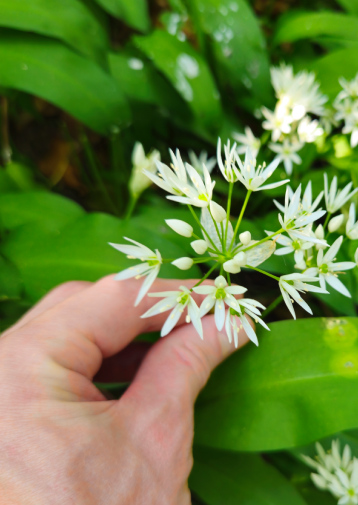
Additionally, White Deadnettle produces visible white flowers, which nettles do not. Despite not having stinging hairs, White Deadnettle is also edible and has a long history of use in traditional medicine and as a culinary herb.
All about Stinging Nettle
Nettles are one of the most abundant plants found in the wild, often growing in areas close to human habitation. Despite this, they are often considered an unwanted invader in gardens and allotments where the soil is fertile and well-tended.
Nettles are some of the first plants to emerge in the spring, sometimes as early as February, thanks to their creeping underground network of rhizomes that allows them to rapidly colonise vast areas.
While nettles are known for their stinging hairs, which contain irritating chemicals that are released when the plant comes in contact with the skin, they are harmless once boiled or steamed.
Medicinal properties of Stinging Nettle
Nettles are particularly rich in iron, protein, and vitamins A, B, and C, making them a fantastic superfood that is often underestimated.
In addition to its nutritional value, stinging nettle has a long history of medicinal usage in the treatment of various ailments.
Although not everyone may enjoy its taste, nettle herbal tea is considered a medicinal drink because of its potential health benefits. People believe that nettle tea has diuretic properties and can help alleviate symptoms of allergies and inflammation.
Culinary uses and recipes with Nettles
Nettle leaves have a slightly nutty flavour with a subtle hint of cabbage. Many recipes use nettle leaves as a vegetable, and are often cooked as a substitute them spinach in dishes such as omelettes, risottos, curries, quiches, and tarts.
Some of the most popular nettle-based recipes include a warming nettle & potato soup or nettle ‘pesto’ for pasta dishes.
Although nettle herbal tea may not be to everyone’s liking, it is considered a medicinal drink due to its potential health benefits.
Safe Stinging Nettle foraging
When collecting stinging nettle, it’s important to wear gloves to avoid skin irritation. The plant’s leaves are covered in tiny stinging hairs that contain droplets of histamine and formic acid, which can cause itching and redness on contact.
However, the stinging action can be neutralized by heat or by drying the plant completely, making it safe to handle and edible.
It’s worth noting that stinging nettle might interact with some medications. Prior consultation with a healthcare provider is crucial before consumption. Avoid during pregnancy and breastfeeding.
Ecological importance of Stinging Nettle
Stinging hairs are a defence mechanism that protects nettles from grazing animals. Interestingly, this also makes them an ideal habitat for a wide variety of insects and other invertebrates.
Nettles are known to harbour overwintering aphids, which serve as a vital food source for ladybirds and other predators.
Nettles are also valuable as an indicator species for soil quality. They are known to thrive in soils that are rich in nitrogen, and their presence can be a sign of a healthy ecosystem.
Sustainable Nettle foraging
Only take the top few leaves from each plant, leaving the majority of the plant intact, using scissors or garden shears to cut the leaves instead of pulling the entire plant out of the ground.

7 thoughts on “Nettle”
Hi Alvaro,
What process do you use to dry the nettle seeds?
Many thanks!
Lucy
Hi Lucy,
Really simple. Just trim the top part of the plant where the seeds are, leave the whole cuts in a tray to dry, preferably in a windowsill on a sunny day. In a couple of days or so they should be dried and the seeds ready to go. I always sieve the racemes, so no fibrous or foreign bits get inside my nettle seed jar.
Hope it helps!
Thanks that’s great- so simple! And thanks for the additional email on this ?
Do you ever run foraging field trips?
Hi Kathy,
I am not currently running any foraging walks, but I might consider doing it in the future.
Many thanks,
Alvaro
Is there a time of year to avoid picking the leaves for food?
I seem to recall something about ‘older’ nettle leaves causing an issue…
Hoping you can clarify this.
Hi Janie,
Several sources state that older nettle leaves develop cystoliths, which interfere with normal kidney function.
It’s generally advised to avoid picking the leaves once the plant blooms.