
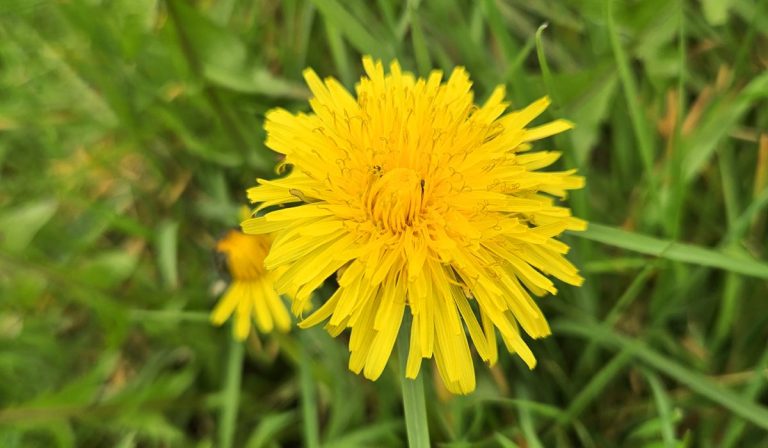
You’ve probably seen the message doing the rounds: “Leave the dandelions for the bees.” It sounds sensible. Dandelions flower early, bees need food, and we should all be doing our bit for pollinators.
But then you spot a beautiful patch of dandelions and fancy a few young leaves for lunch. Are you helping yourself at the bees’ expense? Not necessarily.
The idea that picking dandelions is somehow stealing food from bees has become much more complicated than the reality.
The Rise of Dandelion Pick-Shaming
Dandelions have become something of a protected species in the public imagination. Not legally protected, of course. More in the sense that picking one can occasionally earn you a disapproving look.
The reasoning is understandable. Dandelions provide nectar and pollen, particularly when relatively few other flowers are available. So if bees need them, surely we should leave them alone?
The problem is that this takes a useful ecological message and turns it into a simple rule:
Dandelions = food for bees. Humans = don’t touch.
Nature rarely works quite so neatly.
Do Bees Rely on Dandelions?
Dandelions are useful to pollinators. There’s no reason to pretend otherwise.
They can provide an accessible source of nectar and pollen for bumblebees, honeybees and solitary bees, particularly during periods when other flowers are scarce.
But dandelions aren’t the only flowers on the menu in spring. Willow, crab apple, and cherry, along with early flowers like primrose, crocus, and snowdrops can provide food for pollinators too.
A healthy landscape is a buffet, not a single restaurant.
This matters when we think about foraging. Taking a handful of dandelions from a dense, healthy patch isn’t the same as stripping the only flowers from a scarce habitat. And dandelion is one of the most widespread wild plants in Britain.
The scale of your harvest matters. The abundance of the plant matters. And the condition of the habitat matters.
Don’t Judge the Pick
You might see someone carrying a handful of dandelion flowers and assume they’ve taken too many.
But you weren’t there when they picked them. You don’t know how large the patch was, how abundant it was, or what the surrounding habitat looked like. A handful in a photograph tells you almost nothing about the situation it came from.
Good foraging is contextual. Sometimes a harvest that looks substantial to an observer is perfectly reasonable. Sometimes a much smaller harvest might be inappropriate.
We simply can’t know from the handful alone. So rather than policing what other people pick, learn to read the landscape for yourself.
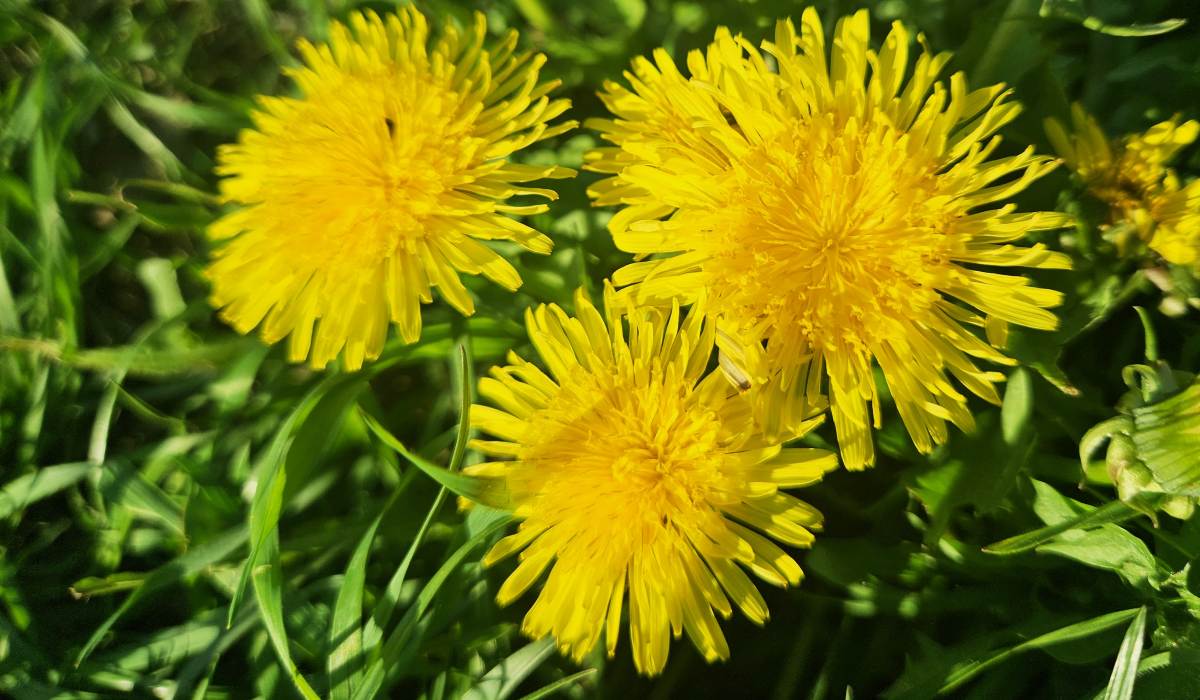
Clearing Up Common Myths
Before worrying about harming a dandelion or the bees, it helps to unpack the main myths. Understanding how these plants grow, and how bees feed, makes foraging far less intimidating and far more satisfying.
Will Picking Flowers Stop Regrowth?
Dandelions are remarkably resilient. Their ability to grow in lawns, verges, meadows and disturbed ground tells you something about how well they cope with being cut, grazed and otherwise disturbed.
Therefore, removing a few flowers doesn’t kill the plant, and established plants can produce further flowers. That doesn’t mean flowers are irrelevant. Flowers that aren’t picked can go on to produce seed, so heavy harvesting could reduce reproduction from that particular plant.
The point is that taking a few flowers from a large population is very different from removing every single flower you find.
Don’t ask only, “Can I pick this?”
Ask, “How much is here?”
That question will serve you far better.
Will Picking Leaves Hinder Growth?
The same principle applies.
Dandelions have a substantial taproot, allowing established plants to store resources underground. Picking a few leaves doesn’t suddenly kill the plant. In fact, anyone who has tried to remove dandelions from a lawn knows how stubborn they can be.
But that doesn’t mean unlimited harvesting is harmless. Leaves are the plant’s solar panels. They capture energy and help the plant grow, flower and reproduce. Snipping a few leaves reduces some of the plant’s photosynthetic surface, but a healthy established dandelion can produce new leaves.
So take what you need, not everything you can carry. Leave plenty of healthy leaves behind.
Will Digging Up Dandelions Kill the Plant?
This is where things become more interesting.
Dandelions have deep roots, and removing the whole plant obviously has a greater impact than taking a few leaves. But even then, dandelions can be surprisingly persistent. Pieces of root can sometimes regenerate, which is one reason they can be such a nuisance in gardens.
Foraging isn’t really about whether a plant can survive being harvested. The better question is whether your particular harvest is sensible in that particular place. A few plants from a large, thriving patch? Probably very different from digging up the last few plants in a small population.
The Bigger Threat to Bees Isn’t Your Lunch
This is perhaps the most important part of the conversation.
If you want to help bees, focusing entirely on whether someone picked three dandelions misses the bigger picture. Pollinators face much broader pressures, including habitat loss, agricultural intensification and pesticide use.
That doesn’t give foragers a free pass. It simply puts our actions into perspective.
Responsible foraging and supporting pollinators aren’t opposing goals.
In many cases, they can actually encourage the same thing: paying attention to the health and abundance of the landscape around us.
The Real Lesson Isn’t “Pick” or “Don’t Pick”
Foraging becomes much more interesting when we stop looking for rigid rules.
Instead of:
“Never pick dandelions because bees need them.”
Try:
“Understand the plant. Look at the patch. Consider the season. Take what you need. Leave plenty behind.”
That approach works far beyond dandelions.
It teaches you to notice abundance rather than simply seeing a plant. To recognise when a population is thriving and when it is struggling. To understand that a handful taken from one place can be insignificant, while the same handful from another place could matter.
Foraging Isn’t About Taking from Nature
This is the bit I think gets lost in the dandelion debate.
Foraging shouldn’t be about asking how much we can get away with taking. It should make us more observant of the world we’re taking from.
When you pick dandelion leaves, you start noticing the plants around. You notice whether they’re flowering. You notice the insects visiting them. You notice what else is flowering nearby. And gradually, a dandelion stops being just a weed you can eat. It becomes part of a living landscape you’re learning to read.
That’s the kind of relationship with nature I want from foraging. Not untouched nature. Not endless extraction.
Attention first. Harvest second.
So yes, leave some dandelions for the bees. But don’t be afraid to pick a few for yourself either. Just look at the patch before you do. If there’s plenty, share it.

2 thoughts on “Should We Really Leave Dandelions for the Bees?”
Thank you for this thoughtful comment. Even in the third week of March, I’ve noticed dandelions going to seed. Judging from my plant pots, and gravel driveway which are richly sprouting new dandelions, I think I’ve had little to no impact making a gallon of dandelion wine!
Like other foragers, I take a little from many places.
I asked my parents neighbours once if they would allow me to pick the tips from a nettle patch growing outside their front fence. They were gobsmacked! First, why would I want to, and why would I think they might object?
Rachel, thanks for sharing your story. Yet another reminder that picking dandelions for food doesn’t impact their growth.