
Barberry: Plant profile
Common names
Common Barberry, European Barberry, Jaundice Berry, Pipperidge, Piprage, Zereshk (IR), Zerešk (IR)
Botanical name
Berberis vulgaris (& other Berberis spp.)
Plant family
Berberidaceae (Barberry)
Distribution
Native to Europe and Asia and found all over the world, except Antarctica and Australia. Common throughout the British Isles.
Where to find Barberries
Parks, gardens, old hedgerows and wasteland.
When to find Barberries
Berries late summer to autumn.
How to identify Barberry
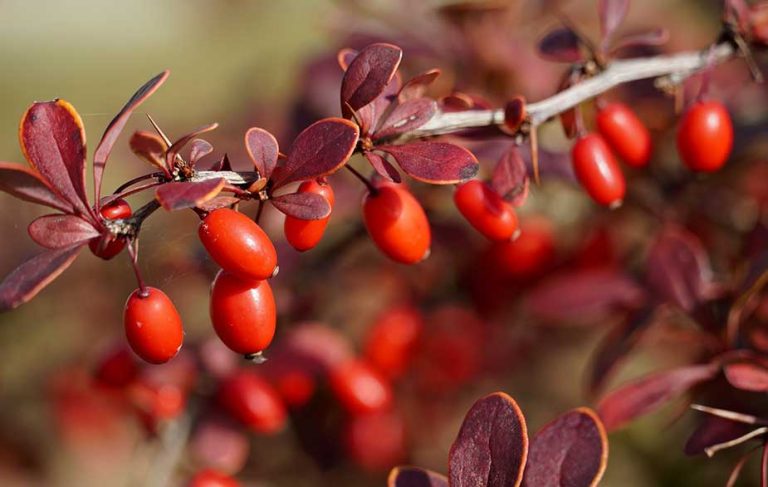
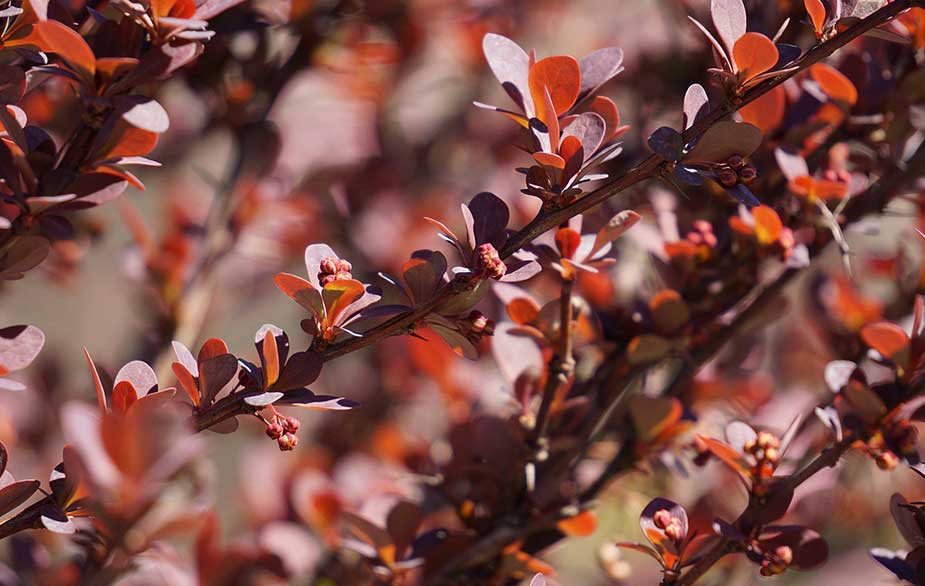
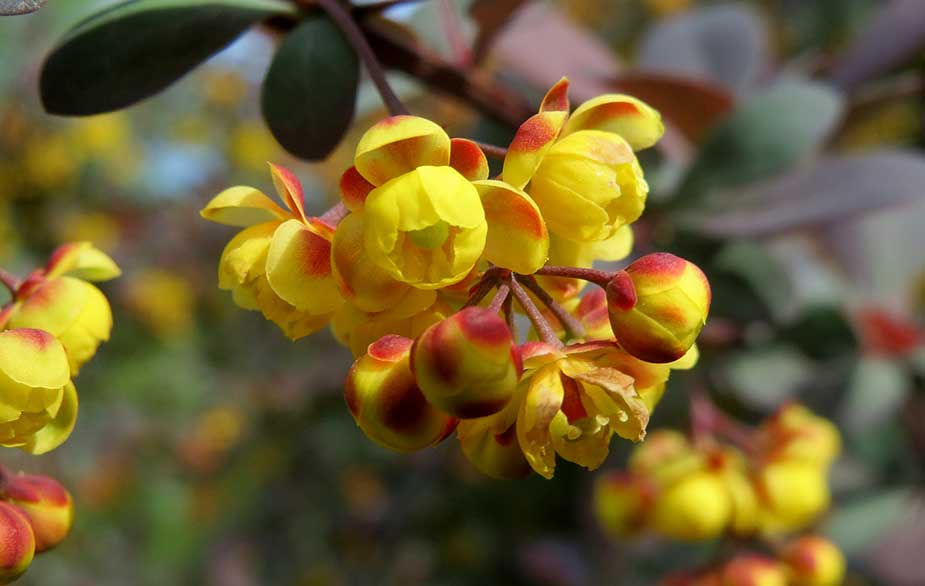
Barberry is an upright deciduous shrub with spines. The leaves are rounded or spoon shaped and may be green or purple in colour. The flowers have six petals (yellow, orange or red) and six sepals and grow singly or in racemes. The fruit is small and oblong, shiny red in colour and contains seeds.
Barberry lookalikes
There are other Barberry species (Berberis sp.). Most of them with green leaves, but also purple ones.
All about Barberry
Barberry is a popular hedging plant, with beautiful yellow flowers and jewel-like scarlet berries that persist on the shrub throughout the winter.
There are over 500 species of Berberis and all of them are edible. Gardeners tend to favour the use of Japanese Barberry or Thumberg’s Barberry (Berberis thunbergii), which has tough seeds and a bitter flavour. However, Common Barberry (Berberis vulgaris) and the seedless Iranian Barberry (Berberis integerrima) are the most palatable.
Medicinal properties of Barberry
Berries are rich in vitamin C and K as well as many antioxidants.
Though there is ongoing research, berberine contained in the roots and stems seems to slightly reduce blood sugar levels in people with diabetes. It also may improve cholesterol levels and it’s used for the treatment of polycystic ovary syndrome or (PCOS).
Culinary uses and recipes with Barberry
The berries are pleasantly tart and make an excellent jelly due to the high pectin content.
In southwestern Asia and especially Iran, the berries are much appreciated. Barberries are added as flavouring for soup, stew and rice (zereshk-polo). It’s also a common stuffing ingredient for chicken.
The berries can be dried or candied for longer shelf-life and used as a substitute of cranberries.
Safe foraging of Barberry
Care should be taken when collecting the berries, because the shrub has long sharp thorns.
Plants containing berberine should be avoided during pregnancy and breastfeeding.
Ecological importance of Barberry
Small birds eat the berries.

7 thoughts on “Barberry”
I love barberry berries best after the winter freezes them and then they thaw. It’s like dried barberry nature’s gift! Salad and aloha!
Er, um,
I do suspect that the response is correct –
It is not likely that anyone would be poisoned by the seeds
of any
SEEDLESS
plant !
But the response does not answer the question –
certainly leaving me still wanting a valid answer .
Some barberry varieties have seeds, while others do not. Neither type is poisonous. However, the variety with seeds is generally not worthwhile.
Can one safely eat the flowers of the barberry?
Hi Victoria,
Though some say so, there are not many reports about edibility. I would err on the side of caution
Can I eat the seed of barberry?
Hi Cedriane,
Barberry seeds are edible, though you would ideally look for seedless varieties, because seeds are often a bit tough