Stand in front of a supermarket vegetable aisle long enough and something becomes obvious. The selection is wide, yet strangely narrow. The same species repeat, season after season, with little variation.
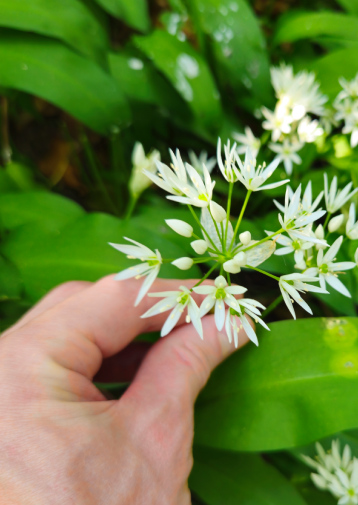
What is missing is not obscure. Wild garlic carpets British woodland each spring. Blackberries spill across hedgerows. Sorrel, nettle, elderflower, and fungi appear reliably year after year. Yet they are almost entirely absent from supermarket shelves.
This absence is not accidental. It sits at the intersection of biology, logistics, economics, law, and culture.
The Supermarket as an Industrial System
Modern supermarkets are built around predictability. Produce must arrive in large volumes, at consistent intervals, and meet strict visual and physical standards. Shape, size, colour, and durability matter as much as flavour.
If a plant does not fit this model — if it is fragile, irregular, seasonal, or difficult to standardise — it simply does not make it to the shelves.
Wild foods are inherently unpredictable. They grow where conditions allow, not where humans decide. Two plants of the same species can differ widely depending on soil, light, rainfall, and competition.
From a retail perspective, inconsistency is risk. From an ecological perspective, it is the whole point.
Reasons Supermarkets Do Not Sell Wild Foods
Wild foods face multiple barriers to reaching shelves, from labour and logistics to taste and cultural expectations. The following explores the main reasons.
Mechanisation and Labour
Industrial agriculture depends on machinery. Fields are designed for tractors, harvesters, and uniform rows. Labour is reduced through scale and repetition.
Wild foods do not grow this way. They appear in hedgerows, woodland edges, verges, and clearings. Harvesting them requires slow, selective attention — recognising species, assessing condition, and choosing what to take and what to leave.
This kind of labour is skilled, time-intensive, and difficult to scale. For supermarkets operating on narrow margins, it rarely makes economic sense.
Shelf Life and Transport
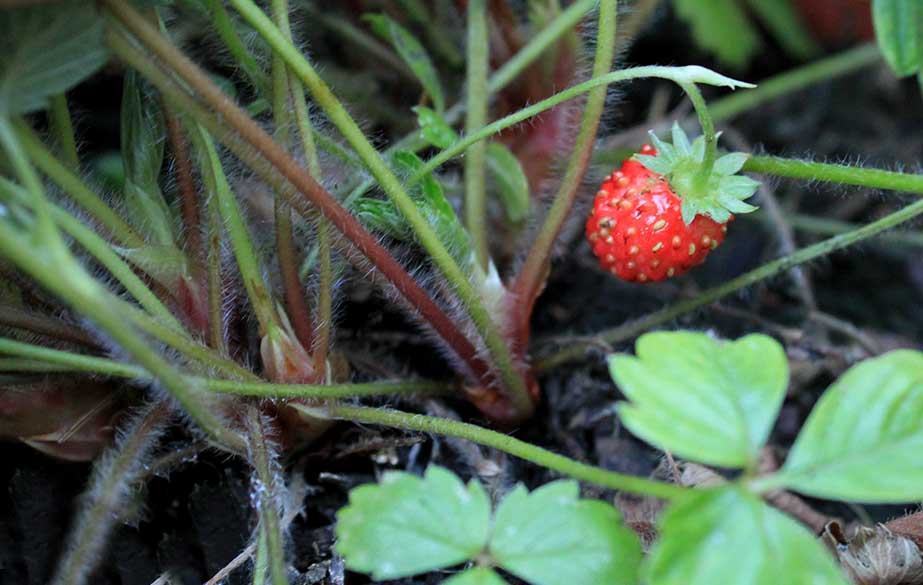
Many wild foods are delicate by nature. Anyone who has picked wild strawberries or chanterelles knows how quickly they deteriorate once harvested.
Small berries bruise easily and lose quality within days. Wild greens wilt fast and tolerate neither long storage nor long transport.
Supermarket crops are bred for endurance. Thicker skins, firmer flesh, and slower ripening survive logistics — often at the expense of flavour and nutritional density.
The system rewards resilience over freshness, and uniformity over character.
Appearance and Consumer Expectation
Rows of identical apples, plums, and pears shape our sense of what food should look like. Clean, symmetrical, blemish-free produce becomes the baseline.
Wild foods rarely conform. Leaves show insect damage. Fruits vary in size and shape. Mushrooms are irregular, sometimes muddy or misshapen.
None of this affects quality or edibility. But decades of conditioning have taught consumers to associate uniformity with value, and irregularity with defect.
Flavour Is Not the Priority
Supermarkets favour flavours that offend no one. Mild, sweet, predictable tastes perform best across large populations.
Wild foods often fall outside this range. Bitter, sour, resinous, and pungent flavours are common. These tastes reward familiarity and context but can challenge untrained palates.
Wild plums carry acidity and depth. Wild apples are sharper and more aromatic. Many wild leaves contain bitterness tied to mineral content and defensive chemistry.
Complexity is harder to market than sameness.
Cultural Preferences Shape Selection
Consumer demand plays a decisive role in what reaches supermarket shelves. What is grown and promoted reflects cultural expectation rather than biological richness.
In much of Northern and Western Europe, sweetness and mildness dominate. Fruit is bred to be soft, sugary, and low in acidity, reinforcing its role as dessert.
In Eastern and Central Europe, a wider range of plum varieties is valued for sharpness and tannin. Sour cherries remain staples there, yet are largely absent from British shelves.
This is not a question of quality, but of familiarity. Supermarkets optimise for what sells quickly and predictably.
Seasonality and Supply
Wild foods follow ecological rhythms rather than production schedules. Their appearance depends on temperature, rainfall, daylight, and local conditions.
A warm spring brings wild garlic early. A dry summer shortens berry seasons. Fungal flushes vary widely year to year.
Supermarkets aim for uninterrupted availability. Empty shelves signal failure. Wild foods simply do not comply.
Law, Protection and Responsibility
Some wild plants are protected by law. Others are locally scarce or ecologically significant.
Commercial harvesting risks over-exploitation and habitat damage. UK foraging law reflects this reality, favouring restraint and local knowledge over extraction.
Small-scale foraging allows for discretion. Industrial demand does not.
Why Mushrooms Are Hard to Cultivate
Some wild foods can be cultivated in small-scale systems. Many cannot. Wild fungi offer a clear example.
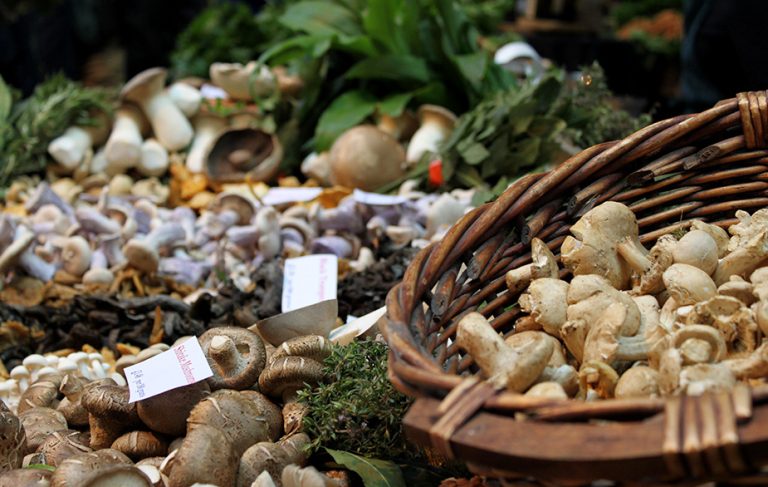
Wild mushrooms, like morels and boletes, aren’t just tricky to cultivate — they’re impossible to farm at scale. They grow in symbiotic relationships with tree roots, require specific moisture levels, and live in very particular ecosystems.
The conditions that support them cannot be reliably replicated. That is why they appear only in small, expensive quantities — when they appear at all.
Invasive Species Cannot Be Farmed
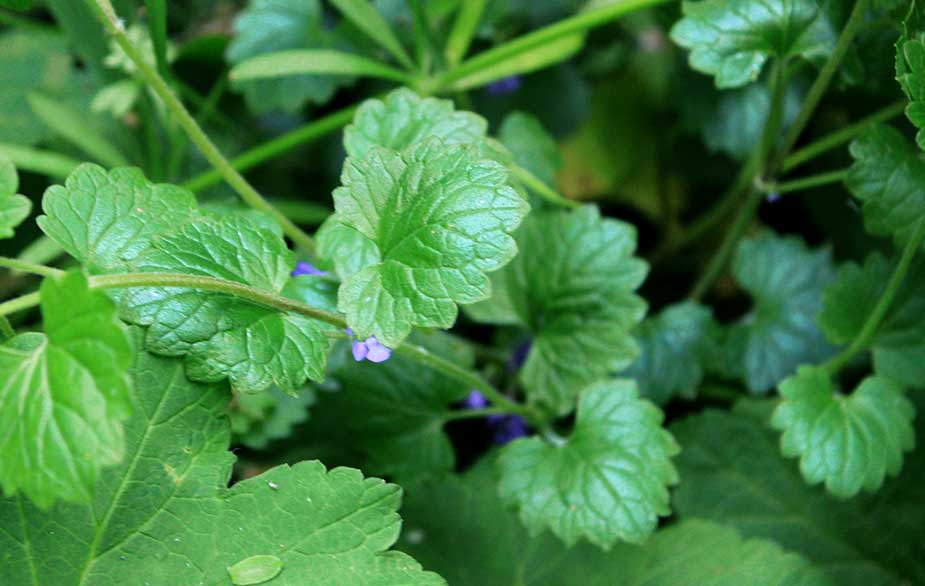
Some edible wild plants pose ecological risks if cultivated widely. Ground elder and Alexanders are familiar examples.
Encouraging their propagation through farming would worsen ecological imbalance. In these cases, responsible foraging acts as gentle population control.
Commercial agriculture cannot replicate this nuance.
The Absence of Wild Foods
The absence of wild foods from supermarket shelves is not evidence of inferiority or poor flavour. It reflects the limits of an industrial food system built for speed, scale, and predictability.
Supermarkets reward uniformity, durability, and control. Wild foods, by contrast, embody variability, seasonality, and ecological complexity — qualities that do not fit neatly into barcodes or supply chains.
The idea that wild foods are missing because they taste unpleasant is largely a myth. Many wild plants are aromatic, mineral-rich, and full of flavour, offering bitterness, acidity, and depth rather than instant sweetness.
This absence highlights not what wild foods lack, but what modern food systems cannot accommodate.
Why Foraging Still Matters
Foraging reintroduces foods that fall outside industrial logic. It restores flavours, nutrients, and species diversity that supermarkets cannot easily carry.
It is not about replacing the weekly shop. It is about widening the diet with foods that are fresher, more seasonal, and often more nutritionally dense. A handful of wild greens can transform how a meal tastes — and how it feels.
Foraging is active engagement. You learn landscapes. You read seasons. You notice abundance and absence. You slow down enough to recognise what is actually growing.
That attention turns food into experience, and eating into participation rather than transaction. Food stops being anonymous. It has a place, a time, and a context. You know where it came from because you were there.
Final Thoughts
Most wild foods are not sold in supermarkets because they were never meant to be.
They belong to landscapes, seasons, and relationships that resist standardisation.
Their absence is not a loss. It is an invitation — to step outside the aisle and into the living system that still feeds us, quietly, every year.
idance to unlock the potential of foraging.